
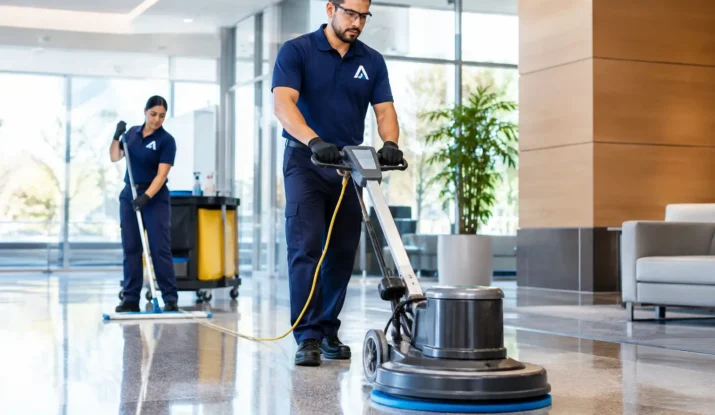
A dull, yellowed floor can make an otherwise well-maintained facility look neglected. This commercial floor stripping guide helps facility managers determine when stripping is justified, how the work should be planned, and what separates a clean restoration from a costly floor-care mistake.
Floor stripping is not routine mopping or a quick machine scrub. It is a controlled process that removes worn floor finish, embedded soil, and buildup so a new protective finish can bond properly. When performed correctly, it improves appearance, supports safer walking conditions, and extends the service life of resilient flooring. When rushed, it can leave chemical residue, damage baseboards, create slip hazards, or cause a new finish to peel within weeks.
Know When a Floor Needs Stripping
Stripping is most commonly used on vinyl composition tile, luxury vinyl tile, sheet vinyl, linoleum, and similar resilient floors that have a finish applied to them. It is generally not the right approach for unfinished concrete, many sealed floors, or specialty surfaces with manufacturer-specific care requirements. The floor type, existing coating, traffic level, and prior maintenance history all matter.
A full strip and refinish is usually appropriate when the floor has heavy discoloration, deep heel marks, visible layers of old finish, widespread scratches, or a cloudy appearance that burnishing and scrubbing no longer correct. Entrances, corridors, school hallways, health care facilities, retail aisles, and break rooms often show these signs first because of high foot traffic and winter moisture.
However, not every dull floor needs to be stripped. A top scrub and recoat may restore a floor with light surface wear while preserving sound layers of finish underneath. This option can reduce labor, chemical use, and downtime. A qualified floor-care professional should inspect adhesion and finish condition before recommending the more aggressive process.
Plan the Work Before Chemicals Reach the Floor
Successful stripping starts with site preparation. The work area should be scheduled around tenant, employee, patient, student, or customer activity whenever possible. For many commercial properties, evenings, weekends, and planned closures are the least disruptive windows. In Chicago-area facilities, winter weather may also affect scheduling, since salt and tracked-in moisture increase cleanup needs at entrances.
Before the project begins, identify the flooring material and confirm the recommended stripping chemistry and pad selection. Using a high-pH stripper on an incompatible surface can permanently alter its appearance. Older flooring also deserves special attention. If the age or composition is uncertain, testing and proper assessment should happen before abrasive work begins.
A pre-job walk-through should establish clear expectations for the scope, access, and drying time. At minimum, the team should confirm:
- The rooms, hallways, restrooms, and entry areas included in the project
- Furniture-moving responsibilities and access to water, drains, and electrical outlets
- Protection for adjacent carpet, wall bases, equipment, and low furniture
- Ventilation needs, building occupancy, and any restricted areas
- The agreed completion time and the period required before foot traffic resumes
Clear planning avoids a common problem: a crew finishing the floor correctly but discovering that desks, fixtures, or delivery schedules prevent the space from reopening on time.
Protect People and Nearby Surfaces
Floor stripping involves wet surfaces, cleaning chemicals, machines, and cords. Work areas should be clearly blocked off with visible wet-floor signs and barriers, not simply marked with a sign at one doorway. Unauthorized foot traffic can track stripper onto carpet, create slip risks, and damage freshly applied finish.
Trained technicians should use appropriate personal protective equipment and follow the product label and Safety Data Sheet requirements. Good ventilation is especially important in enclosed rooms, health care settings, and buildings with sensitive occupants. Color-coded tools and dedicated equipment also help prevent cross-contamination between restrooms, food-service areas, and general floor-care zones.
The Commercial Floor Stripping Process
The process itself is straightforward in principle, but execution requires close attention. Small shortcuts tend to become visible once new finish is applied.
First, loose dust and debris are removed with sweeping, dust mopping, or high-filtration vacuuming. Grit left on the floor can scratch the surface when the machine begins working. Furniture is moved or protected, and edges, door frames, and nearby surfaces are shielded as needed.
Next, a properly diluted stripping solution is applied in manageable sections. Applying solution to too large an area allows it to dry before it can work effectively. The product needs enough dwell time to soften the old finish, but it should never be allowed to dry on the floor. Dwell time varies by product, buildup level, temperature, and flooring material.
A low-speed floor machine with the appropriate stripping pad then agitates the softened finish. Corners, edges, and areas around fixtures typically require careful detail work rather than aggressive machine action. The goal is to remove the finish evenly without gouging tile, flooding seams, or splashing solution onto walls.
The slurry – the mixture of dissolved finish, soil, and cleaning solution – must be collected promptly with a wet vacuum or equivalent recovery equipment. Leaving slurry behind can allow it to dry back onto the floor, creating uneven adhesion problems later. This is one reason commercial-grade recovery equipment and trained operators make a measurable difference.
After stripping, the floor is rinsed thoroughly, often more than once, until it is free of residue. This step is not optional. Residual stripper can interfere with finish bonding, leaving a powdery look, peeling, or patchy gloss. A clean water rinse is followed by close inspection of corners, grout lines, edges, and traffic lanes.
Allow Complete Dry Time
The floor must be completely dry before finish is applied. Moisture trapped beneath new finish can produce cloudy spots and weak adhesion. Drying time depends on humidity, ventilation, floor texture, and the effectiveness of water recovery.
A professional team does not rely only on appearance. They inspect for dampness in seams, along baseboards, and in low areas where water can collect. Fans and air movement may help, but they should be positioned so they do not blow dust onto a freshly prepared surface.
Apply Floor Finish for Protection, Not Just Shine
Fresh floor finish protects resilient flooring from abrasion, stains, scuffs, and moisture. The goal is a consistent protective film with the right level of gloss for the setting. A medical office, school, office lobby, warehouse corridor, and restaurant dining area may all have different appearance and maintenance needs.
Finish should be applied in thin, even coats using clean equipment. Heavy coats can take too long to dry and may create ridges, bubbles, or uneven gloss. Multiple thin coats generally produce better durability than fewer heavy coats. Each coat needs adequate dry time before the next is applied.
The number of coats depends on traffic, floor condition, finish specifications, and the maintenance plan that follows. A high-traffic lobby may need a stronger initial buildup than a lightly used administrative office. More finish is not always better, though. Excessive coating can make future maintenance harder and increase the likelihood of cracking or buildup.
Once the final coat has cured, the area should remain closed until it can safely accept foot traffic and returned furniture. Dragging chairs, carts, or desks across a newly finished floor can undo hours of careful work.
Build a Maintenance Plan That Delays the Next Strip
A strip and refinish project protects the floor, but daily and periodic maintenance determines how long that protection lasts. Entry matting is one of the most practical defenses against grit, salt, water, and abrasive soil. Mats must be properly sized, cleaned, and replaced when worn, or they stop doing their job.
Routine dust mopping removes abrasive particles before they grind into the finish. Neutral cleaning products help preserve the coating, while overly harsh chemicals can dull or weaken it. High-traffic areas may benefit from scheduled burnishing, spray buffing, or scrub-and-recoat service based on their specific use.
Facilities should also document spills, leaks, and recurring trouble spots. A broken ice machine, poorly maintained entry mat, or delivery route can quickly wear a floor in one location. Addressing the source often saves more money than repeatedly repairing the visible damage.
Choose a Provider That Can Manage the Details
Commercial floor stripping is labor-intensive, time-sensitive, and closely tied to safety. The right provider should assess the flooring before prescribing a service, use trained and insured technicians, follow OSHA-conscious work practices, and bring the equipment needed for efficient solution recovery and finish application.
For facility managers who prefer one accountable partner, ABF Facility Services can coordinate hard-floor care alongside recurring janitorial cleaning, restroom supplies, mats, and other facility needs. That coordination helps protect newly restored floors between specialty service visits instead of treating floor care as a one-time project.
A well-restored floor should do more than look bright on reopening day. It should give your staff, tenants, customers, and visitors confidence that the facility is clean, cared for, and managed with attention to the details that last.