
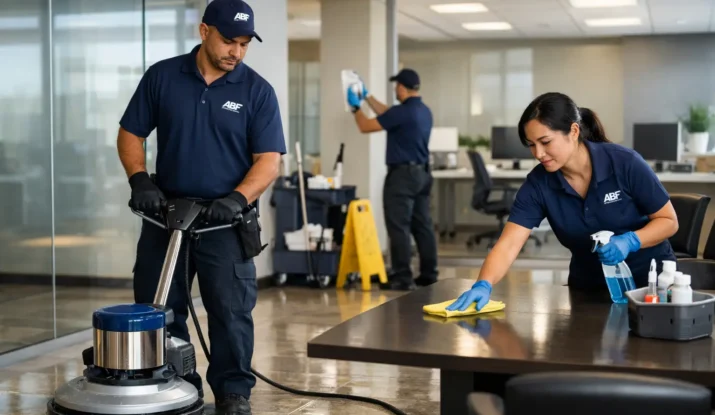
A restroom that runs out of soap at noon, a lobby floor dulled by winter salt, or trash left near a loading area can become a larger operational problem quickly. Commercial cleaning is not simply about making a building look better after hours. It is a working system that supports employee health, customer confidence, safety, compliance, and the useful life of the property itself.
For facility managers, property owners, office managers, and operations leaders, the real question is not whether a facility needs cleaning. It is whether the current plan is detailed enough, dependable enough, and flexible enough to keep up with the way the building is actually used.
What Commercial Cleaning Should Accomplish
A quality cleaning program creates visible results, but its value goes further. Clean entryways, maintained restrooms, dust-free workspaces, and cared-for floors tell visitors that the people responsible for the property pay attention. For tenant-facing and customer-facing facilities, that impression can affect retention, reviews, and trust.
Behind the scenes, consistent service helps reduce allergens, remove soil that damages finishes, control odors, and keep high-touch areas sanitary. In offices, schools, health care settings, restaurants, retail spaces, and industrial facilities, each of those outcomes has a direct effect on the people using the space every day.
The right priorities depend on the environment. A professional office may need detailed desk-area cleaning, restroom servicing, carpet care, and a polished lobby. A warehouse may need attention to dust, dock areas, break rooms, floor debris, and waste handling. A restaurant may need frequent sanitation support, grease-sensitive cleaning procedures, pest-control coordination, and linen or restroom-supply management.
That is why a generic checklist often produces inconsistent results. The building’s traffic patterns, operating hours, surfaces, regulations, and public visibility should shape the work.
Cleanliness Is Also Asset Protection
Floors are a clear example. Grit tracked through an entrance can scratch hard surfaces and wear down protective coatings. Spills that are not addressed promptly can stain carpet, create slip hazards, or damage underlying materials. Regular hard-floor care, carpet extraction when appropriate, entry mat service, and pressure washing can extend the life of expensive finishes.
The same principle applies to restrooms, break rooms, fixtures, and waste areas. Preventive care costs less than allowing a problem to build until it requires an urgent repair, deep restoration, or tenant complaint response.
Build a Commercial Cleaning Plan Around Actual Use
A dependable program starts with a walkthrough and an honest assessment of what the property needs. Square footage matters, but it is only one part of the equation. A small, busy medical office may require more frequent restroom attention than a much larger office with limited daily traffic. A manufacturing site may need specialized processes that would be unnecessary in a standard workplace.
A useful service plan identifies cleaning zones, the required frequency for each zone, and the expected standard of completion. It should also establish who handles special requests and how issues are reported and resolved.
For many properties, the core plan includes recurring janitorial service, restroom cleaning and replenishment, trash removal, dusting, vacuuming, mopping, and cleaning of common areas. Specialty work can be scheduled around those recurring tasks based on seasonal needs, building conditions, or operational changes.
A complete facility plan may also include:
- Hard-floor stripping, waxing, scrubbing, or burnishing
- Carpet cleaning and spot treatment
- Sanitization and disinfection for high-touch or high-risk areas
- Pressure washing for exterior walks, entrances, docks, or dumpsters
- Pest-control programs and waste-area support
- Junk removal after move-outs, renovations, or equipment replacement
These services do not need to occur at the same frequency. In fact, scheduling every task too often can waste budget, while scheduling too little can allow preventable damage and cleanliness concerns to accumulate. A good provider explains the trade-offs and recommends a schedule based on use, not guesswork.
Supplies Should Not Be an Afterthought
A clean restroom that lacks paper towels or hand soap is not fully functional. The same is true when a kitchen runs out of liners, a maintenance team cannot find gloves, or a building’s entry mats are overdue for replacement.
Managing consumables through separate vendors creates avoidable administrative work and makes it easier for shortages to go unnoticed. Combining cleaning with restroom products, toiletries, janitorial supplies, floor mats, gloves, reusable towels and mops, and restaurant linens or aprons gives the facility a more coordinated process. One accountable provider can see what is being used, replenish it on schedule, and address service gaps before they affect occupants.
Consistency Comes From the System Behind the Crew
The appearance of a facility depends on the people performing the work, but reliable results require more than a crew showing up. They require training, documented expectations, proper equipment, supervision, and a process for responding when conditions change.
Trained, uniformed, insured professionals help create accountability. OSHA-compliant work practices matter, particularly in industrial, health care, food-service, and high-traffic environments where safety requirements are not optional. Clear protocols also help protect building occupants and cleaning personnel when working around equipment, chemicals, wet floors, and sensitive areas.
Equipment and products affect the result as well. Microfiber tools capture soil effectively and can help reduce cross-contamination when used correctly. Color-coded cleaning systems separate tools by area, helping prevent a restroom cloth from being used in a break room or office. High-filtration vacuums can improve dust control, while advanced floor-care equipment delivers more consistent results on large surfaces.
Sustainable products should be part of the conversation, but they must still perform. Green Seal-certified products can be a practical choice for facilities seeking effective cleaning solutions with environmental considerations in mind. The best approach balances cleaning performance, occupant comfort, surface compatibility, and the facility’s sustainability goals.
Know When Routine Service Is Not Enough
Recurring janitorial work keeps a building in order, but certain conditions call for a specialty response. Salt and slush during a Chicago winter can quickly affect lobbies, hallways, and entrances. A construction project can leave behind fine dust and debris that routine service is not designed to remove. A spill, pest issue, move-out, or sudden increase in foot traffic may require immediate attention.
Specialty cleaning should be easy to request and clearly scoped. Before approving the work, ask what areas will be addressed, what equipment or products will be used, whether the service will disrupt operations, and how the results will be verified. This is especially important for floor restoration, industrial cleaning, pressure washing, and sanitation projects, where the wrong method can damage a surface or interfere with normal business activity.
A responsive provider will help schedule work at practical times, whether that means after business hours, during a low-traffic window, or in phases that keep the property open.
Why One Provider Can Simplify Facility Management
Coordinating a cleaning company, a supply distributor, a mat vendor, a linen service, a pest-control provider, and a removal crew can leave a facility manager spending too much time following up on details. Consolidating appropriate services does not eliminate the need for oversight, but it reduces handoffs and creates clearer ownership.
With one provider relationship, recurring cleaning can be coordinated with supply replenishment, mat rotation, seasonal floor care, sanitation needs, and on-demand projects. When a problem arises, there is one point of contact rather than several vendors each responsible for only one piece of the issue.
This model works best when the provider has the operational range to manage those services well, not simply add them to an invoice. ABF Facility Services uses a one-provider approach to help Chicagoland facilities coordinate cleaning, maintenance support, sanitation, supplies, and specialty services through a single accountable relationship.
Questions to Ask Before Selecting a Cleaning Partner
Price matters, but the lowest proposal can become costly if service is unreliable, supplies are missed, or concerns take days to resolve. Ask prospective providers how they train their teams, how they handle quality checks, and who responds when the scope needs to change. Confirm insurance coverage, safety practices, and experience with facilities similar to yours.
It is also reasonable to ask for a clear scope of work rather than accepting broad promises. The scope should state which spaces are cleaned, how often each task is performed, what is included in restroom service, how consumables are managed, and which specialty services are available. Clear expectations make it easier to measure performance and address problems early.
Finally, consider communication. Your facility will not stay static. Tenants move, schedules shift, weather creates new cleaning demands, and unexpected incidents happen. A provider should be easy to reach and prepared to adjust without making every request feel like a separate project.
A well-run cleaning program gives your team one less daily concern. When your facility is clean, supplied, safe, and ready for the next shift, customer visit, inspection, or tenant tour, it becomes easier to focus on the work that moves your organization forward.