
A cleaning schedule that looks good on paper can still fail at 8:30 a.m. if crews are vacuuming near client meetings, restrooms run short on supplies, or high-touch areas are missed after a busy day. Knowing how to schedule office cleaning means matching cleaning tasks to how your facility actually operates, not simply choosing the cheapest or most convenient time slot.
For office managers, property managers, and operations leaders, the goal is consistent cleanliness with as little disruption as possible. The right plan protects employee health, supports a professional first impression, and gives your team clear accountability when something needs attention.
Start With Your Facility’s Daily Rhythm
Before deciding how often cleaning should occur, look at when and how people use the building. An office with a steady daytime staff has different needs than a customer-facing lobby, medical office, shared workspace, school administration building, or property with multiple tenants.
Map out peak traffic periods first. Note when employees arrive and leave, when visitors are most likely to enter, when conference rooms are used, and when restrooms receive the heaviest traffic. Also identify areas that become dirty quickly, such as break rooms, entryways, elevator lobbies, copy rooms, and reception areas.
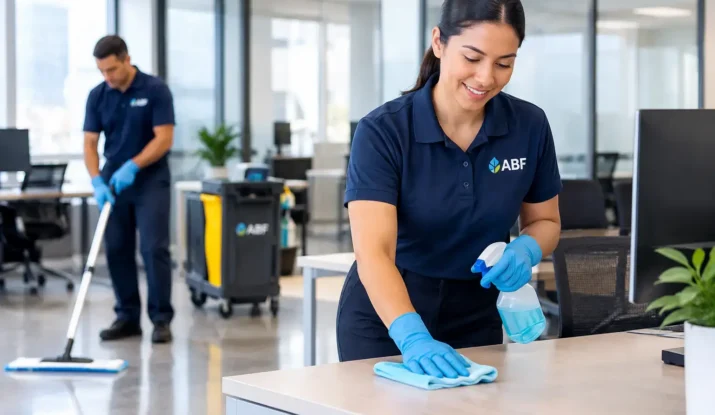
This review helps determine whether cleaning should happen after hours, before opening, during the day, or through a combination of shifts. After-hours cleaning is often best for detailed work such as vacuuming, floor care, trash removal, and full restroom service. Day porter service can be valuable when a facility needs ongoing attention to spills, restroom checks, touchpoint disinfection, and lobby presentation while the building is occupied.
There is a trade-off. A nightly crew can complete deeper work without interrupting employees, but it may not address daytime messes or depleted supplies. Daytime service provides visible support, yet cleaning activities must be planned carefully around meetings, visitors, and noise-sensitive work.
How to Schedule Office Cleaning by Area and Task
Not every part of an office needs the same level of service. A reliable schedule separates routine tasks from periodic maintenance, so critical work is never overlooked and specialty services are planned before surfaces show excessive wear.
Daily cleaning priorities
High-traffic and shared areas typically require daily attention. This usually includes emptying trash and recycling, cleaning and restocking restrooms, sanitizing high-touch points, wiping break room counters, cleaning sinks, and maintaining entryways. Reception areas should also be checked daily because they shape a visitor’s first impression of your organization.
Trash service deserves more attention than many schedules give it. Overflowing bins, food waste left overnight, and cardboard buildup can create odor, pest, and safety concerns. If your team produces higher-than-average waste, schedule extra pickup days or place additional collection points where they are needed.
Weekly and monthly work
Weekly tasks commonly include more detailed dusting, interior glass cleaning, spot-cleaning walls, cleaning appliance exteriors, and vacuuming edges and low-traffic areas. Depending on your workplace, conference rooms may need a more detailed reset before important meetings or client visits.
Monthly or quarterly work should cover tasks that protect the building’s condition over time. This can include carpet extraction, machine scrubbing hard floors, high dusting, interior window cleaning, upholstery cleaning, and detailed restroom treatment. Floors are a major example: daily mopping alone cannot replace the scheduled machine cleaning, burnishing, stripping, or waxing needed for the specific flooring material.
A professional cleaning provider can help establish these intervals based on foot traffic, weather, flooring type, and industry requirements. Chicago-area facilities often need to adjust entryway and hard-floor maintenance during wet, snowy, or salt-heavy months to prevent slip hazards and reduce damage from tracked-in debris.
Choose the Right Cleaning Frequency
Cleaning frequency should reflect occupancy, use, and risk rather than square footage alone. A small office with frequent customer appointments may require more service than a larger office with hybrid employees who are onsite only a few days each week.
Consider the following operational questions when setting your frequency:
- How many employees, visitors, tenants, or customers use the space each day?
- Are food, beverages, patient care, manufacturing materials, or other higher-risk materials present?
- Does the building have restrooms, locker rooms, shared kitchens, or multiple entrances?
- Are there specific cleanliness expectations from tenants, clients, regulators, or corporate leadership?
- Does weather create extra floor and entryway maintenance needs?
For many traditional offices, nightly janitorial service on weekdays provides a dependable baseline. Smaller or lightly occupied offices may be well served by two or three visits per week, provided restrooms, waste, and common areas remain under control. High-traffic buildings, healthcare environments, schools, restaurants, and industrial facilities often need daily service plus daytime support or specialty sanitation protocols.
The best frequency is the one that keeps the facility consistently clean without paying for unnecessary labor. Review the schedule after the first 30 to 60 days. If bins are consistently half full, conference rooms sit unused, or certain restrooms need attention before the scheduled visit, adjust based on real conditions.
Build Cleaning Around Security and Access
A cleaning schedule is only dependable when the crew can enter, work safely, and secure the building correctly. Include access procedures in writing before service begins. Clarify who provides keys, key cards, alarm codes, loading dock access, elevator access, and after-hours contact information.
Your provider should understand which areas are restricted and whether cleaning personnel need escorts or background-clearance requirements. This is especially relevant for medical offices, schools, financial offices, data-sensitive workplaces, and industrial sites.
Establish a simple escalation process for issues such as water leaks, broken fixtures, unusual odors, pest activity, unsafe spills, or a missed service area. The cleaner should know who to notify, how quickly to report it, and whether photos or service documentation are required. Clear communication prevents a minor maintenance concern from turning into a tenant complaint or operational interruption.
Coordinate Supplies With the Cleaning Plan
Office cleaning and supply management should work together. A restroom cannot be considered properly maintained if it is clean but out of soap, paper towels, toilet tissue, or feminine hygiene products. Likewise, a break room needs more than wiped counters if liners, hand soap, and disposable towels are depleted.
When you schedule service, set replenishment levels for essential consumables and determine who monitors inventory. Some facilities prefer a fixed delivery schedule; others need usage-based replenishment that accounts for changing occupancy. The right approach depends on storage space, budget controls, and how quickly supplies are used.
Consolidating cleaning, restroom products, floor mats, gloves, reusable towels, and related supplies through one accountable provider can reduce administrative work and eliminate gaps between vendors. ABF Facility Services uses this type of coordinated approach to help facilities keep their spaces cleaned, stocked, and ready for daily use.
Plan for Seasonal and Special Cleaning Needs
A recurring janitorial schedule is the foundation, but it should not be the only plan. Seasonal conditions, events, construction work, employee illness, and tenant turnover can all create needs outside the normal scope.
Build in a process for requesting specialty services, such as carpet cleaning, pressure washing, hard-floor restoration, disinfection, junk removal, or post-construction cleanup. Knowing how these requests are approved and scheduled saves time when an urgent need arises.
For example, schedule extra entryway cleaning during winter weather, deeper carpet care after periods of heavy foot traffic, and detailed floor work during lower-occupancy periods. If your business hosts events or client meetings, arrange a pre-event cleaning and a prompt post-event reset rather than asking a routine crew to absorb additional work without enough time.
Review Quality, Not Just Completion
A cleaning crew may arrive on schedule, but reliability also means the right work is completed to the expected standard. Conduct regular walkthroughs with a checklist tailored to your facility. Look at restroom condition, dust on visible surfaces, floors near entrances, trash areas, break rooms, touchpoints, and the overall presentation of customer-facing spaces.
Ask employees and tenants where they see recurring issues. Their feedback often identifies problems a manager may miss, such as a restroom that runs out of towels by midday or a meeting room that is not being reset consistently. Use that information to refine the scope and timing of service.
Quality control should be collaborative, not adversarial. A responsive provider will welcome clear expectations, trained-site inspections, and timely feedback. Look for teams that use appropriate equipment and methods, including color-coded cleaning systems, microfiber tools, high-filtration vacuums, and sustainable products suited to your facility’s needs.
A well-planned schedule gives your workplace more than a clean appearance. It creates a predictable standard for safety, comfort, and professionalism – one that employees notice, visitors trust, and your operations team can manage with confidence.