
A lobby floor can look clean at 7:00 a.m. and worn out by noon when it is exposed to foot traffic, moisture, salt, carts, and spills. Choosing the best commercial floor finishes is not simply a matter of shine. The right finish protects the flooring material, supports slip resistance, reduces long-term replacement costs, and helps employees, tenants, patients, and customers see that the facility is cared for.
For Chicago-area facilities, the decision becomes even more practical during winter. Ice melt, road salt, slush, and tracked-in debris can quickly dull finishes and damage unprotected floors. A successful floor-care plan begins with the floor material, the way the space is used, and the maintenance resources available after the finish is applied.
What a Commercial Floor Finish Actually Does
A commercial floor finish is a protective treatment applied to certain hard-surface floors. It can create a more uniform appearance, improve cleanability, add resistance to scuffs and stains, and help preserve the material underneath. Depending on the floor type, a finish may be a topical coating, a wax-like acrylic finish, a sealer, or a specialized resin system.
Not every floor should receive the same treatment. A high-gloss finish may be appropriate for vinyl composition tile in a school hallway, but it is usually not the right choice for a textured porcelain tile entrance or a busy industrial work area. Applying the wrong product can create buildup, reduce traction, complicate cleaning, or even void a flooring warranty.
The goal is not to make every floor glossy. The goal is to select a finish that delivers the right balance of appearance, protection, safety, and maintainability.
Best Commercial Floor Finishes by Floor Type
Acrylic floor finish for VCT and resilient tile
Water-based acrylic finishes are among the most common choices for vinyl composition tile, vinyl tile, and some resilient flooring. These finishes are applied in thin coats after the floor is properly stripped or deep cleaned. Once cured, they create a protective layer that can be burnished or buffed to maintain a polished appearance.
Acrylic finish works well in offices, schools, medical buildings, retail spaces, and common areas where a clean, bright floor supports the overall impression of the property. It also provides a practical maintenance path: instead of replacing damaged tile prematurely, floor-care teams can scrub, recoat, and periodically strip and refinish the surface.
The trade-off is that acrylic finishes need consistent care. Dirt and grit act like sandpaper under shoes and carts, so daily dust mopping and routine auto-scrubbing matter. Skipping this maintenance can leave a once-attractive floor cloudy, scratched, or uneven.
Urethane finish for high-traffic resilient flooring
Urethane-based finishes generally offer stronger resistance to scuffs, black heel marks, chemicals, and frequent cleaning than standard acrylic options. They are often a good fit for high-traffic corridors, retail floors, healthcare areas, and facilities that want a durable finish with less frequent burnishing.
This option can cost more upfront, but the longer maintenance cycle may make sense for properties with demanding traffic patterns or limited downtime. It is particularly useful where appearance standards are high but daytime floor work would disrupt staff, visitors, students, or customers.
Urethane is not a universal answer. Application conditions, cure time, flooring compatibility, and manufacturer instructions must be closely followed. A professional assessment helps prevent adhesion issues and ensures the finish matches the facility’s cleaning chemicals and equipment.
Epoxy and resinous coatings for industrial environments
For concrete floors in warehouses, manufacturing areas, commercial kitchens, mechanical rooms, and garages, epoxy or other resinous coatings can provide substantial protection. These systems can resist abrasion, oils, many chemicals, and heavy rolling loads while making concrete easier to clean.
Epoxy coatings are available in different thicknesses, colors, and textures. A broadcast aggregate can improve traction in areas exposed to water or oils, while a smoother finish may be appropriate in dry storage or light-duty work zones. The coating system should be selected around the actual hazards in the space, not only the desired look.
The key consideration is preparation. Concrete must be clean, sound, dry enough for the system, and mechanically profiled so the coating can bond correctly. Rushing surface preparation is one of the fastest ways to create peeling, blistering, or premature failure. Facilities also need to plan for downtime while the coating cures.
Penetrating sealers for concrete, stone, and grout
Penetrating sealers soak into porous surfaces rather than leaving a noticeable film on top. They are often used on concrete, natural stone, grout, masonry, and certain unglazed tile surfaces. Their purpose is to reduce moisture absorption and staining while retaining much of the material’s natural texture and appearance.
This makes penetrating sealers a strong choice for entryways, restrooms, food-service areas, exterior-adjacent spaces, and stone surfaces where a glossy coating would look out of place or create maintenance concerns. They can also help simplify spill cleanup before stains set into the material.
A sealer does not eliminate the need for regular cleaning, and it may not provide the same visual transformation as a topical finish. It is a protection-first solution, especially valuable for porous materials and areas where slip resistance is a priority.
Polish and guard systems for concrete
Polished concrete is popular in retail, offices, schools, and industrial settings because it can be durable, modern-looking, and relatively straightforward to maintain. Some polished concrete floors benefit from a guard or stain-protection treatment that helps resist spills and makes daily cleaning easier without creating a thick coating.
This approach works best when the concrete has been properly prepared and densified. It offers a low-maintenance appearance compared with traditional waxed floors, but it still needs regular dust removal, neutral cleaning, and prompt spill response. Neglected polished concrete can lose clarity and develop traffic patterns just like any other surface.
How to Choose the Right Finish for Your Facility
Floor material is the first question, but it is not the only one. A facility manager should also consider foot traffic, rolling loads, moisture exposure, chemicals, cleaning frequency, lighting, and the level of appearance expected by occupants and visitors.
For example, a medical office may prioritize cleanability, a professional appearance, and low-odor application products. A school needs finishes that stand up to heavy hallway traffic, chair movement, and frequent cleaning. A restaurant needs durable, slip-conscious surfaces that tolerate grease and repeated wet cleaning. A warehouse may need chemical resistance and traction more than shine.
It is also wise to evaluate labor requirements before selecting a finish. A beautiful high-gloss program that requires frequent burnishing may not be cost-effective if the facility does not have the staff, equipment, or service schedule to support it. Conversely, a more durable, lower-maintenance finish may reduce disruptions and help control costs over time.
Floor Finish Maintenance Determines Its Life Span
Even the best finish will fail early if grit, standing water, or harsh chemicals are left on the floor. Entry matting is one of the most cost-effective protections available because it captures moisture and abrasive debris before it reaches the finished surface. In winter, mats should be changed or cleaned often enough to remain effective rather than becoming another source of moisture and soil.
Daily care should match the flooring system. This typically includes dry soil removal, prompt spill cleanup, and cleaning with the correct dilution of a neutral or manufacturer-approved product. Overuse of aggressive degreasers, acidic cleaners, or abrasive pads can dull finishes and shorten their useful life.
Periodic machine scrubbing, buffing, burnishing, recoating, or deep cleaning restores the floor before damage becomes widespread. A planned maintenance schedule is more predictable and less disruptive than waiting until the floor looks unacceptable and requires a major restoration project.
Safety and Sustainability Belong in the Decision
A floor finish should support safe movement, not work against it. Wet-condition traction, floor texture, application method, drying time, and cleaning procedures all influence slip-and-fall risk. Gloss alone is not a safety measure, and a highly reflective floor can sometimes make moisture harder to see.
Facilities should also consider indoor air quality and chemical exposure. Low-odor, low-VOC products and Green Seal-certified cleaning products can be valuable choices, particularly in schools, healthcare environments, occupied offices, and properties with sensitive occupants. Product selection should be paired with trained application, clear signage, and proper ventilation during floor-care work.
When Professional Floor Care Makes the Difference
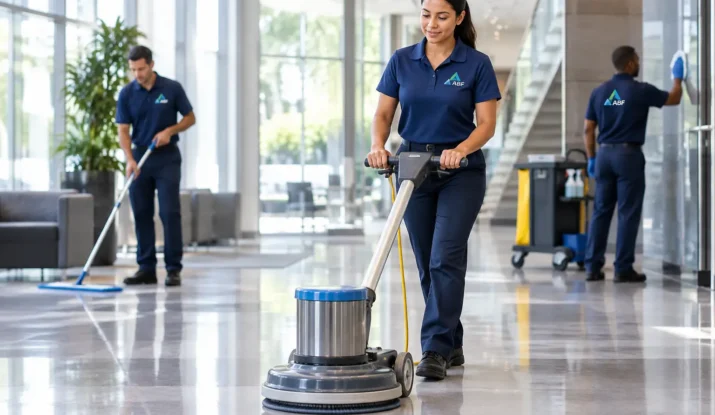
Commercial floor finishing is specialized work. Proper stripping, coating, sealing, and machine operation require trained technicians, compatible products, and attention to cure times and safety controls. An incomplete strip or uneven application can leave behind visible lines, trapped soil, poor adhesion, and a finish that fails much sooner than expected.
ABF Facility Services helps Chicagoland facilities build practical hard-floor care programs around their flooring, traffic, operating hours, and presentation standards. With trained, uniformed, insured teams and professional floor-care equipment, the focus stays on consistent results without creating unnecessary disruption for your staff or visitors.
The right finish should make daily operations easier: cleaner-looking floors, safer walking surfaces, fewer premature repairs, and a property that continues to make a strong first impression long after the work is complete.