
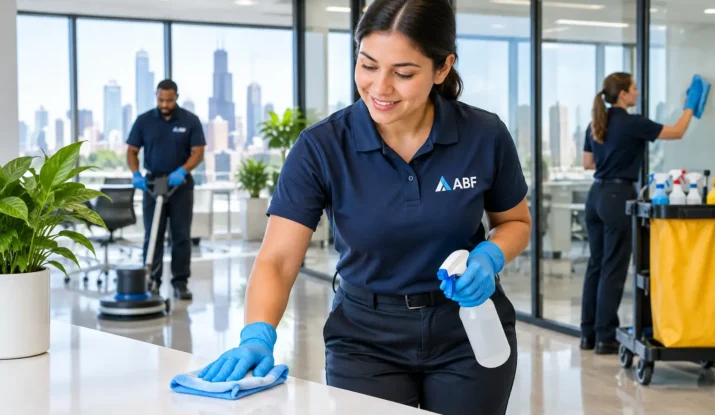
A facility can look acceptable at 8:00 a.m. and still create problems by noon. A restroom runs out of paper products, a lobby floor shows salt stains after a Chicago winter morning, trash backs up near a loading area, or a missed cleaning task turns into a tenant complaint. When evaluating the best Chicago janitorial providers, the real question is not who can clean a building once. It is who can keep your property clean, supplied, safe, and professionally maintained week after week.
For facility managers, property managers, operations leaders, and business owners, a janitorial partner is part of daily operations. The right provider reduces avoidable calls, protects surfaces and equipment, supports a healthier workplace, and gives employees, tenants, patients, and customers confidence in the space.
What the Best Chicago Janitorial Providers Do Differently
Price matters, but the lowest monthly proposal is rarely the full cost of service. A provider that misses visits, rotates unfamiliar crews through your building, or leaves managers to chase down supplies can cost more in labor, complaints, and damage control than a well-managed contract.
The strongest providers begin with a clear understanding of how your facility operates. An office with hybrid schedules has different needs from a medical setting, restaurant, warehouse, school, retail store, or multi-tenant property. Cleaning frequencies, entry points, high-touch areas, waste volume, floor types, and operating hours should all shape the scope of work.
Look for a company that can explain its plan in practical terms. That means defining what gets cleaned daily, weekly, and periodically; identifying who is responsible for inspections; and establishing how service issues are reported and resolved. Vague promises of a “cleaner facility” are not enough. Reliable service is built on specific expectations and consistent follow-through.
Consistent crews and accountable supervision
A trained crew that understands your building can work more efficiently and notice changes before they become bigger issues. They know which restroom has the highest traffic, where debris collects after deliveries, which floors need careful treatment, and when a conference area requires an extra reset.
Ask how the provider staffs absences, trains new team members, and supervises quality. Uniformed, insured professionals and documented training help create confidence, but supervision is what keeps standards steady after the first month. A provider should have a direct process for responding when something is missed, not simply an assurance that it will be handled.
Cleaning methods that support health and asset care
Commercial cleaning is not just about appearance. Cross-contamination controls, product selection, vacuum filtration, microfiber tools, and floor-care equipment affect indoor cleanliness and the life of facility assets.
For example, color-coded cleaning systems can help separate restroom tools from those used in offices or common areas. High-filtration vacuums can reduce the recirculation of fine dust and allergens. Green Seal-certified products may be a practical fit for organizations with sustainability objectives or occupants sensitive to harsh odors. These details do not replace good execution, but they show whether a provider has a disciplined approach.
A Practical Evaluation Checklist for Janitorial Service
Before requesting proposals, define the operational result you need. Do you need a crew every evening, daytime porter support, several weekly visits, or a combination of recurring and specialty service? Are there areas that require OSHA-aware procedures, controlled access, food-service sanitation, or careful handling around machinery?
Then evaluate potential providers against the same criteria. A useful comparison should cover these five areas:
- Scope and frequency: The proposal should identify rooms, tasks, visit schedules, exclusions, and periodic services such as carpet extraction, hard-floor maintenance, pressure washing, or high-dusting.
- Staffing and training: Confirm that workers are trained for your environment, properly insured, and able to work within site-specific safety and access requirements.
- Quality control: Ask how inspections are performed, how often supervisors visit, and how the provider documents completed work and corrective action.
- Communication and response: Determine who receives service requests, what response times are realistic, and how urgent issues are handled after hours.
- Supplies and related services: Find out whether the provider can manage restroom consumables, floor mats, liners, gloves, towels, mops, and other essentials alongside cleaning.
This comparison makes it easier to spot an incomplete bid. One proposal may appear lower because it excludes periodic floor care, supply replenishment, day porter coverage, or emergency cleanup. Another may include these services but fail to state the expected frequency. Clear definitions allow for a fair decision.
Ask about specialty needs before they become emergencies
Many facilities need more than standard nightly janitorial service. A warehouse may need industrial cleaning around work areas and break rooms. A restaurant may need linen and apron support, grease-related cleanup coordination, or pest-control service. A property manager may need move-out cleaning, junk removal, pressure washing, or a quick response after an incident.
There is a trade-off between working with several specialty vendors and consolidating services with one accountable provider. Separate vendors can make sense when a highly specialized need is occasional or governed by an existing contract. But multiple vendor relationships also mean more invoices, more scheduling, more handoffs, and more opportunities for a task to fall through the cracks.
For many properties, a single-provider model is more efficient when recurring cleaning, supplies, floor care, sanitation, maintenance cleaning, and removal work need to coordinate. ABF Facility Services supports this approach by combining commercial and industrial cleaning with managed supply and rental solutions, helping clients reduce the administrative burden of keeping facilities ready every day.
Match the Service Plan to Your Building Type
There is no universal cleaning schedule that works for every business. A polished lobby may need attention several times a day, while a low-traffic professional office may be well served by fewer evening visits. The correct frequency depends on occupancy, weather, business activity, flooring, public access, and the standards your organization needs to maintain.
Offices and professional buildings
Office managers often need dependable restroom service, trash removal, break-room cleaning, dust control, and presentable common areas. In shared buildings, consistency matters because tenants notice uneven service quickly. A well-planned service agreement should also address conference rooms, glass, elevators, entry mats, and seasonal floor protection.
Health care, schools, and high-traffic public spaces
These environments demand close attention to touchpoints, restroom sanitation, waste handling, and scheduling around occupants. Ask providers how they train teams for your setting and which processes they use to prevent cross-contamination. Disinfection service should be targeted to the facility’s actual risks and traffic patterns rather than treated as a generic add-on.
Industrial sites and warehouses
Industrial facilities require a different lens. Dust, debris, equipment traffic, loading areas, and employee break spaces can create cleaning and safety concerns that are not typical in an office. The provider should understand safe work practices, site access, appropriate equipment, and the difference between routine janitorial work and a deeper industrial cleaning project.
Do Not Overlook Supplies, Floors, and Seasonal Pressure
Restroom supplies are easy to ignore until they are missing. When a cleaning company performs the work but another vendor handles consumables, gaps in responsibility can leave managers solving preventable problems. A provider that monitors and replenishes toiletries, paper products, liners, gloves, and other everyday items can create a more reliable experience for building occupants.
Floor care deserves the same level of planning. Carpet, tile, vinyl, concrete, and other surfaces each need the correct process. Improper chemical use or aggressive equipment can shorten floor life, while postponed maintenance allows soil and salt to become embedded. Regular hard-floor care, carpet cleaning, mat service, and seasonal entryway attention protect appearance and help preserve the asset value of the property.
Chicago-area weather adds another consideration. Snow, slush, road salt, and wet entryways can make floors look neglected quickly and increase slip risks. During these periods, confirm that the provider can adjust service, monitor entry points, and coordinate mat changes or additional cleanup when conditions demand it.
Questions to Ask Before You Sign
A productive final conversation should move beyond a sales presentation. Ask who will be accountable for the account, how often the scope will be reviewed, and what happens if your building needs change. Request clarity on service start-up, security procedures, insurance coverage, safety practices, and the communication path for urgent concerns.
You should also ask for a realistic transition plan. Switching providers can be disruptive if keys, access procedures, supply levels, and task expectations are not organized from the start. A capable partner will schedule a walk-through, document priorities, establish a service calendar, and communicate with your on-site contacts before the first routine visit.
The best choice is the provider that makes your job easier after the contract is signed. Choose a team that listens to your facility requirements, gives clear answers, treats details as operational priorities, and has the capacity to respond when your building needs attention.