
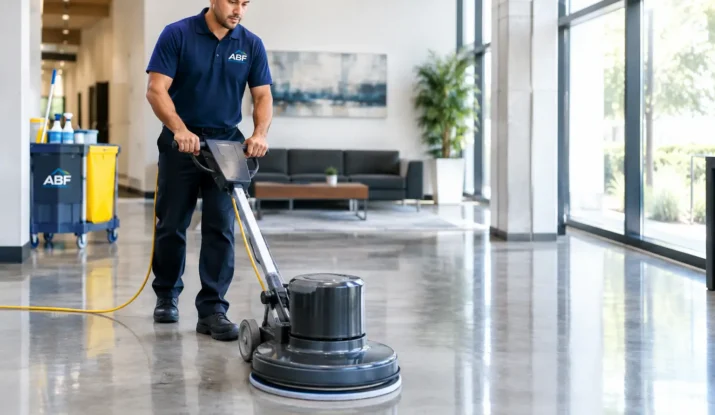
Polished concrete gives a commercial facility a clean, modern appearance, but its shine is not maintenance-free. Facility managers who know how to maintain polished concrete can protect a major flooring investment, reduce slip concerns, and keep entrances, corridors, showrooms, and work areas looking consistently professional.
The key is to treat polished concrete as a high-performance floor system, not simply as ordinary gray concrete. Daily grit removal, the right cleaning chemistry, quick spill response, and scheduled professional care all work together to preserve the floor’s clarity and reflectivity.
How to Maintain Polished Concrete Every Day
Most visible wear on polished concrete starts with dry soil. Sand, sidewalk debris, salt residue, and fine grit act like abrasive particles under foot traffic and rolling equipment. Over time, they can dull the surface and create traffic lanes, especially near entrances, elevators, receiving areas, and break rooms.
Begin with routine dry soil removal. High-quality microfiber dust mops capture fine particles more effectively than traditional cotton mops, which can push debris across the floor. In larger facilities, a high-filtration vacuum or dust-control machine may be more efficient, particularly in warehouses, schools, medical buildings, and busy office corridors.
For damp cleaning, use a neutral cleaner specifically approved for polished concrete. The solution should be mixed according to the manufacturer’s directions. Overconcentrating floor cleaner does not improve results. It can leave residue that attracts soil, makes the floor look hazy, and reduces the crisp appearance that polished concrete is known for.
Clean water matters just as much as the cleaner. Change mop water frequently, use clean microfiber pads, and avoid returning dirty water to the floor. On larger areas, an automatic scrubber with the correct pad and controlled water use can deliver more consistent results than manual mopping.
Protect the Floor Before Dirt Reaches It
Entryway protection is one of the most cost-effective ways to maintain polished concrete. A properly sized matting system captures moisture, grit, and road salt before visitors and employees track them farther into the building. This is especially valuable in Chicagoland facilities, where winter weather can bring snow, slush, deicing materials, and abrasive salt indoors for months at a time.
Mats should be vacuumed or cleaned regularly, not left to become saturated with debris. A dirty mat can stop trapping soil and may transfer it back onto the floor. Inspect mat edges as well, since curled or damaged mats can become a trip hazard.
Furniture glides, protective pads beneath movable fixtures, and designated routes for carts or pallet jacks can also reduce localized wear. Polished concrete is durable, but repeated contact from rough wheels, exposed metal, or loaded equipment can leave marks or alter the finish in high-traffic zones.
Respond to Spills Quickly and Correctly
Polished concrete is denser than unfinished concrete, but it is not automatically immune to staining. The degree of stain resistance depends on the floor’s finish, its guard or stain protector, the age of the surface, and the substance involved. Coffee, cooking oils, grease, beverages, chemicals, and standing water should be addressed promptly.
Blot spills instead of aggressively scrubbing them into the floor. Use a clean microfiber cloth or absorbent material, then clean the area with a neutral floor cleaner and fresh water if needed. For oily spills, use a concrete-safe degreaser approved for polished surfaces, following the product instructions carefully.
Avoid using acidic products, bleach-based cleaners, harsh alkaline degreasers, or abrasive powders unless a flooring professional has confirmed they are appropriate. These products can etch the surface, leave discoloration, degrade the floor guard, or create an uneven appearance. The same caution applies to unapproved disinfectants. When sanitation protocols require stronger products, verify that the chemistry is compatible with polished concrete and remove residues as directed.
Use the Right Equipment and Pads
The wrong cleaning tool can slowly reduce the appearance of a polished floor. Stiff brushes, aggressive pads, and dirty mop heads can scratch, haze, or leave behind contaminants. Floor-care teams should use equipment selected for the concrete’s level of polish, traffic level, and current condition.
For routine machine cleaning, soft pads are generally appropriate. In some facilities, a designated polishing or burnishing program can restore clarity in heavy-use areas, but it should be based on the floor’s finish and the manufacturer’s recommendations. Excessive burnishing or incorrect pad selection can create heat, wear the guard prematurely, or produce inconsistent shine.
Color-coded microfiber systems are useful in commercial environments because they help prevent cross-contamination between restrooms, break areas, offices, and public spaces. This supports cleaner operations while helping protect a floor surface that can show streaks and residue quickly.
Build a Maintenance Schedule Around Foot Traffic
There is no single maintenance frequency that fits every facility. A polished concrete floor in a quiet corporate office has different demands than one in a retail store, restaurant, school hallway, manufacturing site, or healthcare waiting area.
Daily dry mopping and spot cleaning are common for most commercial properties. Damp mopping may be needed daily in public-facing or high-traffic spaces, while lower-traffic areas may need it less often. Entryways, reception areas, and restrooms deserve more frequent attention because they receive more soil, moisture, and visible use.
A practical maintenance program should include these recurring tasks:
- Daily removal of dust, grit, debris, and spills
- Regular damp mopping or auto-scrubbing with a neutral cleaner
- Weekly inspection of entry mats, traffic lanes, stains, and scuff marks
- Periodic deep cleaning to remove embedded soil and cleaner buildup
- Scheduled reapplication of guard or stain protection when performance declines
Keep a simple floor-care log that records cleaning products, dilution ratios, equipment used, inspection notes, and service dates. This gives facility teams a clearer picture of what is working and helps identify changes before they become expensive restoration projects.
Watch for Signs the Floor Needs Professional Care
Routine cleaning preserves polished concrete, but it cannot correct every issue. A floor may need professional attention if it develops widespread haze, persistent traffic patterns, deep scuffs, visible etching, staining that does not lift with approved cleaning, or a noticeably dull appearance after proper cleaning.
In many cases, the solution is not a full restoration. A trained floor-care team may be able to deep clean the surface, remove accumulated residue, apply a compatible guard, or perform targeted polishing in the most affected areas. The right approach depends on whether the issue is surface soil, a worn protector, mechanical abrasion, chemical damage, or a problem within the concrete itself.
Avoid applying wax or conventional floor finish to polished concrete as a quick fix. These coatings can change the intended look of the floor, require a different maintenance process, trap dirt, and create uneven wear. If a protective treatment is needed, it should be designed for polished concrete and applied according to the floor manufacturer’s guidance.
Train Staff for Consistent Results
Even a well-designed program can fail when different shifts use different products or methods. Make sure employees and cleaning providers understand which cleaner, pads, dilution ratios, and procedures are approved for the floor. Label chemicals clearly and store product safety information where staff can access it.
For facilities with multiple service needs, a coordinated provider can help align daily janitorial work, entry mat service, supply replenishment, specialty floor care, and seasonal cleanup. That consistency reduces the chance that an unapproved chemical or tool is introduced during a busy shift.
A polished concrete floor should look clean because it is clean, not because it has been covered with residue or temporary shine products. With disciplined daily care and timely professional support, the floor can continue to reflect the standard of the facility around it.