
A dull, scuffed floor can make an otherwise well-maintained facility look neglected. The right answer is not always a full restoration. Understanding floor stripping versus scrubbing helps facility managers choose the level of care that restores appearance without spending more time, labor, or finish than the floor actually needs.
For Chicago-area offices, schools, healthcare settings, retail stores, restaurants, and industrial facilities, hard-floor care is an asset-protection decision. The condition of a floor affects slip resistance, customer impressions, tenant satisfaction, and the long-term cost of maintaining the surface. Stripping and scrubbing both have a place in a professional floor-care program, but they solve different problems.
Floor Stripping Versus Scrubbing: The Core Difference
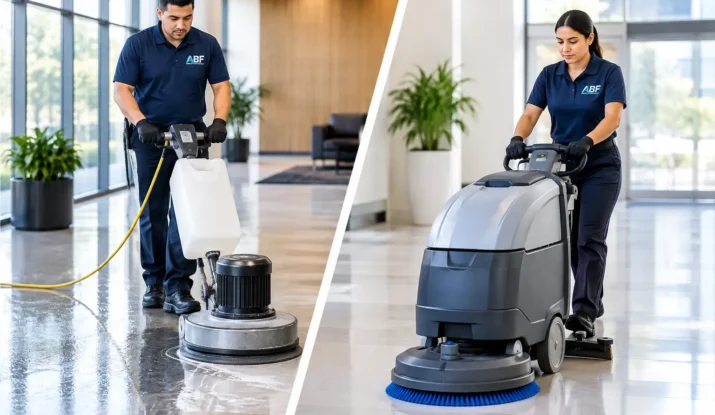
Floor scrubbing is a maintenance or restorative cleaning process. A floor machine, appropriate pad, cleaning solution, and recovery equipment remove embedded soil, scuff marks, residue, and surface grime. Depending on the floor type and condition, scrubbing may be followed by one or more fresh coats of finish to restore gloss and protection.
Floor stripping is a deeper process. It removes the existing layers of floor finish, along with the dirt and discoloration trapped within those layers, so the floor can be refinished from a clean base. A professional team applies a compatible stripping solution, agitates the old finish with specialized equipment, removes the slurry thoroughly, rinses the surface, and applies new finish after the floor has dried completely.
Put simply, scrubbing cleans and refreshes the existing finish. Stripping removes the existing finish and starts the protective system over. Neither service is automatically better. The right choice depends on the floor material, traffic level, maintenance history, appearance standards, and the condition of the current finish.
When Commercial Floors Need Scrubbing
Scrubbing is often the practical choice when the floor still has a sound, even finish but has lost its clean appearance. Entrances, hallways, break rooms, restrooms, retail aisles, and corridors can collect fine grit, winter salt, food residue, chemical splash, and tracked-in soil that daily mopping does not fully remove.
A deep scrub can remove this buildup before it permanently damages the finish. It is commonly used as part of an interim maintenance plan for resilient flooring such as vinyl composition tile, luxury vinyl tile, sheet vinyl, and other compatible hard surfaces. In many cases, a scrub-and-recoat service can restore a brighter, more uniform look without the downtime and labor required for complete stripping.
Scrubbing is generally appropriate when the finish is intact, the floor does not show widespread yellowing or peeling, and the surface has not developed excessive layers of finish. It is also a smart option for facilities that want to maintain their floors between scheduled restoration projects rather than waiting for visible failure.
What a scrub can address
A professional scrub can improve the appearance of light scuffs, traffic-lane soil, surface haze, residue from improper cleaning products, and dullness caused by fine abrasion. It can also prepare a floor for recoating when the existing finish remains properly bonded to the surface.
However, scrubbing has limits. It cannot correct finish that is flaking, deeply discolored, unevenly layered, or separating from the floor. Adding new finish over a failing base may briefly improve shine, but it can lock in defects and lead to a more difficult restoration later.
When Floor Stripping Is the Better Investment
Floor stripping is warranted when the existing finish has reached the end of its useful life. Common signs include persistent yellowing, peeling edges, deep black marks that do not respond to scrubbing, uneven gloss, visible buildup around corners, or floors that look dirty immediately after cleaning.
In high-traffic commercial environments, layers of finish can gradually trap soil and become cloudy. Entryways exposed to de-icing salts and moisture may show premature wear. Restaurants can experience grease film near service areas, while healthcare and school facilities may see heavy traffic patterns that wear through finish in specific lanes. These conditions can make the floor look inconsistent and reduce the protection between daily foot traffic and the flooring material itself.
Stripping removes those compromised layers so a new finish system can bond correctly. The result is not simply a cleaner-looking floor. Proper refinishing helps protect the underlying material from stains, abrasion, and moisture intrusion, extending the floor’s usable life and delaying replacement costs.
Why stripping requires careful planning
Because stripping uses specialized chemistry and equipment, it should be performed by trained professionals who understand the flooring material and manufacturer guidance. Using the wrong chemical, pad, dwell time, or agitation level can damage certain surfaces. Natural stone, wood, some luxury vinyl products, and specialty coatings may require a different restoration method or may not be suitable for traditional stripping at all.
The process also requires controlled work areas, proper ventilation, wet-floor protection, complete slurry recovery, and sufficient dry time before refinishing. In an occupied facility, work is commonly scheduled during evenings, weekends, school breaks, or other low-traffic periods to reduce disruption and allow the finish to cure properly.
How to Decide Between Stripping and Scrubbing
The decision should begin with a floor assessment, not a calendar date. Some facilities need an annual strip and refinish in heavily used areas. Others can extend the life of their finish with scheduled scrubbing, recoating, daily dust mopping, and entrance matting. A floor that receives consistent care may not need full stripping as often as one exposed to grit, moisture, and inconsistent maintenance.
Consider the condition of the finish first. If it is dull but still even and bonded, scrubbing and recoating may be enough. If the finish is discolored, peeling, severely scratched, or visibly layered, stripping is usually the more dependable solution.
Next, consider the flooring material. VCT has long been commonly stripped and refinished, but not every hard floor should be treated that way. LVT, polished concrete, ceramic tile, stone, rubber, and epoxy-coated surfaces each have different maintenance requirements. A one-size-fits-all approach can reduce appearance or void manufacturer recommendations.
Finally, evaluate operational needs. A scrub-and-recoat project is generally less disruptive and may carry a lower upfront cost. Full stripping costs more because it is more labor-intensive, but it can prevent the repeated expense of applying new finish over an unstable foundation. The lowest initial price is not always the lowest lifecycle cost.
The Maintenance Steps That Reduce Stripping Frequency
A professional floor-care plan should protect the finish between major restoration services. Daily dry soil removal matters because grit acts like sandpaper under shoes, carts, and rolling equipment. High-filtration vacuuming and microfiber dust mopping reduce abrasive particles before they scratch the surface.
Entry mats are equally important, especially during Chicagoland winters. Properly placed and maintained matting captures water, salt, and debris before it reaches finished flooring. When mats are saturated or poorly maintained, they cannot perform their job and may contribute to slip hazards.
Use neutral cleaners at the correct dilution for routine mopping. Excess chemical, overly strong degreasers, and dirty mop water can leave residue that dulls the floor or weakens finish over time. Color-coded cleaning systems, clean microfiber tools, and trained crews help prevent cross-contamination from restrooms, food-service areas, and other high-risk spaces.
Regular inspections provide another advantage. A facility team or cleaning partner can identify worn traffic lanes, moisture issues, mat failures, and product residue before the entire floor requires stripping. Addressing a small concern early can preserve both appearance and budget.
Why Professional Execution Matters
Floor work is highly visible, but the best results depend on details that are easy to miss. Preparation includes moving or protecting furnishings, posting safety signage, selecting compatible chemicals and pads, and controlling access to the work zone. During the service, the team must remove residue completely, avoid leaving standing water near seams or baseboards, and apply finish evenly in thin, properly dried coats.
Poorly executed stripping can leave chemical residue, uneven coverage, streaks, or adhesion failures. Poorly executed scrubbing can grind soil into the floor, leave water behind, or create an inconsistent appearance. Experienced commercial floor-care teams use appropriate machines, recovery equipment, and documented processes to manage these risks while respecting the facility’s hours and safety requirements.
ABF Facility Services helps commercial and industrial properties build floor-care schedules around the actual condition of their floors, rather than treating every surface the same. Trained, uniformed, insured teams can coordinate specialty floor care with recurring janitorial service, restroom supply needs, mats, and other facility requirements through one accountable relationship.
A floor should not have to look worn out before it receives attention. Schedule an assessment when dullness, buildup, or finish wear first becomes visible, then choose the level of service that protects the surface and keeps your facility looking ready for employees, tenants, customers, and visitors.