
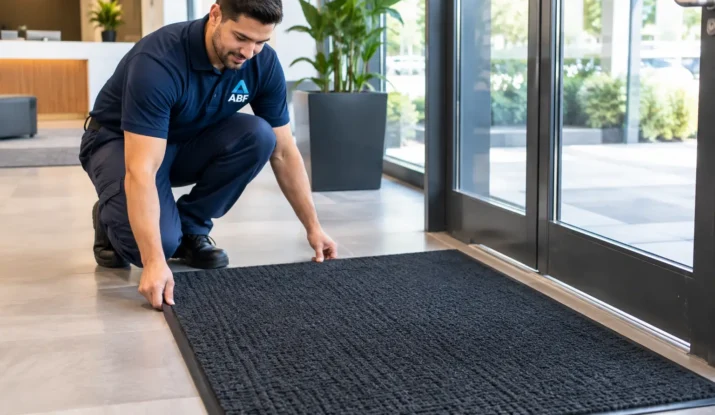
A wet Chicago morning can put more than water at your front door. It can carry salt, grit, mud, and moisture across lobby tile, office carpet, warehouse concrete, and retail flooring within minutes. A dependable floor mat rental program gives your facility a practical first line of defense, replacing soiled mats on a scheduled basis before they become part of the problem.
For facility managers, property owners, and operations teams, mats are not a minor finishing detail. The right mats help reduce slip hazards, limit floor damage, support a cleaner appearance, and lessen the daily burden on janitorial staff. The key is choosing a program that matches your traffic, entry conditions, and operational schedule.
Why Floor Mat Rental Is a Facility-Care Decision
Flooring is one of the most visible and expensive surfaces in a commercial property. Dirt brought in through entryways does not stay at the entryway. Foot traffic spreads abrasive particles across hard floors and carpet, where they can dull finishes, scratch surfaces, wear fibers, and make routine cleaning less effective.
A properly placed entrance mat captures a meaningful portion of that debris before it travels farther into the building. When mats are exchanged regularly, they continue to absorb moisture and trap dirt instead of becoming saturated, flattened, or visibly stained. That difference matters in offices, medical settings, schools, restaurants, retail stores, industrial facilities, and multi-tenant properties.
Rental also removes the work of laundering, storing, inspecting, and replacing mats internally. A facility may be able to purchase mats, but ownership often shifts the maintenance responsibility to employees who already have other priorities. If mats are washed inconsistently or returned to service before they are fully dry, their appearance and performance can suffer.
The Benefits Go Beyond a Cleaner Entrance
Clean mats create a better first impression, but their operational value extends well beyond the lobby. They can help protect floor-care investments by reducing the dirt that reaches carpets and finished hard floors. Less grit underfoot can mean less frequent deep cleaning, fewer scuff marks, and a more consistent appearance between scheduled floor-care services.
Safety is another consideration. Moisture near entrances increases the chance of slips and falls, particularly during rain, snow, and thawing conditions. Mats with appropriate backing and absorbent fibers help manage that moisture. They are not a substitute for prompt spill response, warning signage, or sound safety procedures, but they are an important preventive measure.
For customer-facing businesses, presentation is equally important. A curled, faded, or dirty mat can make an otherwise clean entrance look neglected. Freshly serviced mats reinforce the message that the property is maintained with care. In tenant buildings and hospitality environments, that small detail can influence how visitors view the entire operation.
Which Areas Need Commercial Floor Mats?
Most facilities begin with exterior and interior entrance mats, but high-traffic zones throughout the property may benefit from a mat program. The best placements depend on how people move through the building, where moisture collects, and which surfaces need added protection.
Entrances, Lobbies, and Reception Areas
Exterior scraper mats remove larger particles from shoes before people enter. Interior wiper mats then absorb remaining moisture and fine debris. Using both creates a more effective transition from outside conditions to indoor flooring, especially in Chicagoland weather.
Reception areas and main lobbies often need mats that support a polished, professional appearance. These spaces receive guests, prospective tenants, employees, and delivery personnel, so mat condition should be part of the facility’s visual standards.
Hallways, Elevators, and High-Traffic Paths
In office buildings, schools, healthcare facilities, and multi-tenant properties, dirt is often carried from the entrance into corridors and elevator banks. Runner mats can help protect these paths where concentrated foot traffic causes visible wear.
The right placement is more useful than simply adding mats everywhere. A site walkthrough can identify traffic patterns, pinch points, and areas that may need seasonal adjustments.
Kitchens, Break Rooms, and Work Areas
Anti-fatigue and safety mats may be appropriate where employees stand for extended periods or where floors are more likely to become wet. Food-service spaces, production areas, packing stations, service counters, and maintenance rooms all have different requirements.
These mats should be selected for the work being performed, the flooring below them, and cleaning needs. A mat that works well at a front entrance may not be suitable for an area exposed to oils, food debris, or frequent washdown procedures.
How Often Should Rental Mats Be Exchanged?
There is no single exchange schedule that works for every commercial property. A quiet professional office may need a different frequency than a busy retail store, restaurant, healthcare site, school, or industrial facility. The right schedule depends on traffic volume, weather exposure, mat location, and the level of presentation your facility needs to maintain.
Weekly service is often a strong fit for entrances with steady public traffic or significant weather exposure. Biweekly service may work for lower-traffic interior locations. During winter or rainy periods, some facilities need more frequent changes than they do during dry weather.
The important point is consistency. Mats should not remain in place until they look visibly overloaded. By then, they may be holding moisture and dirt that can transfer back onto shoes and surrounding floors. Scheduled service keeps the program proactive rather than reactive.
What to Look for in a Floor Mat Rental Provider
A rental program should be easy to manage, but it should not be generic. Your provider should understand the connection between mat service, cleaning performance, safety, and floor preservation. Before starting service, ask how the provider evaluates your entrances and whether service can be adjusted as seasons or facility needs change.
Look for clear communication about delivery days, exchange frequency, mat sizes, placement, and what happens if a mat is damaged or a location needs an additional mat. Reliable service matters because a missed exchange can leave an entrance looking worn at the exact time your facility is trying to make a strong impression.
It also helps to work with a provider that can coordinate mat service with broader facility needs. When janitorial cleaning, restroom supplies, hard-floor care, reusable towels, and floor mats are managed through one accountable relationship, there are fewer gaps between services and fewer vendors for your team to coordinate.
Make Mat Service Part of Your Seasonal Plan
Facilities often notice mat problems after the first major snowstorm or a stretch of heavy rain. A better approach is to review mat needs before those conditions arrive. Confirm that entrance coverage is sufficient, verify exchange frequency, and consider temporary runners for areas that experience seasonal traffic increases.
Salt deserves particular attention in the Chicago area. It can leave a white residue on hard floors and carpets, contribute to surface wear, and make a clean lobby appear dull. Effective mat coverage, frequent exchange, and routine floor cleaning work together to control the problem. None of these services replaces the others.
Summer brings different concerns. Rain, landscaping debris, dust, and construction activity can still make their way indoors. Facilities with busy loading docks, employee entrances, or customer-facing storefronts should evaluate mat performance throughout the year, not only during winter.
A Better Fit for One-Provider Facility Management
ABF Facility Services helps commercial and industrial clients coordinate the ongoing services that support a clean, safe, and well-stocked property. Floor mats can be planned alongside janitorial service, consumable replenishment, hard-floor care, and specialty cleaning, with attention to the details that affect daily operations.
A customized program begins with the facility itself: where people enter, what they track in, how often surfaces are cleaned, and what standards visitors, employees, tenants, or customers expect. From there, the goal is straightforward – place the right mats in the right areas and keep them serviced before they compromise appearance or performance.
A clean entrance tells people that the rest of the building is managed with the same care. When your mats are working as intended, they quietly protect your floors, support safer movement, and help every visitor start with a better impression.