
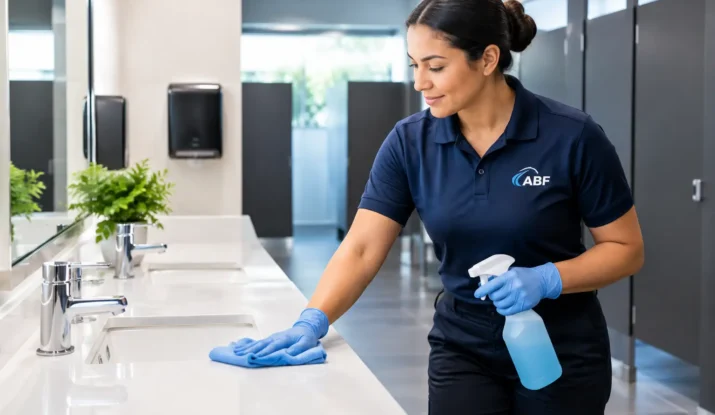
A restroom complaint rarely starts with technology. It starts when a visitor finds an empty soap dispenser, an overflowing waste bin, a wet floor, or a fixture that does not work. Smart restrooms help facility teams identify and address those problems earlier, protecting the clean, safe, professional experience that employees, customers, patients, students, and tenants expect.
For commercial properties, a smart restroom is not simply a restroom with touch-free fixtures. It is a space where connected dispensers, occupancy sensors, traffic data, leak alerts, and service reporting help the people responsible for cleaning and maintenance make better decisions. Used correctly, these tools can reduce avoidable waste, improve response times, and give managers better visibility into a part of the building that strongly shapes public perception.
What Makes a Restroom “Smart”?
Smart restroom systems use sensors or connected equipment to collect useful operational information. A soap or paper dispenser may report its fill level. A traffic counter may show when a restroom has had an unusually busy period. A water-monitoring device may flag a continuously running toilet or faucet. Some systems can send alerts directly to a manager or cleaning team when attention is needed.
The goal is not to replace trained cleaning professionals with an app. Sensors cannot sanitize high-touch surfaces, remove soil from grout, clean mirrors, restock shelves, or inspect a floor for hazards. Their value is in helping trained teams prioritize work based on actual conditions rather than relying only on a fixed schedule.
That distinction matters. A low-traffic executive office restroom may need a different service pattern than a busy restaurant restroom, school washroom, medical waiting-area restroom, or production-floor locker room. Smart data can support those decisions, but it should be paired with regular inspections and a cleaning plan built around the facility’s needs.
Why Smart Restrooms Matter to Facility Managers
Restrooms are one of the few spaces nearly every building occupant uses, yet facility managers cannot be present there all day. When supplies run out between routine rounds, the problem becomes visible immediately. The same is true when a fixture leaks, an odor develops, or cleaning is delayed during a surge in traffic.
Connected monitoring can provide a clearer picture of restroom activity. Instead of sending staff to check every dispenser at the same interval, teams can focus on locations nearing a refill point or restrooms with higher-than-normal use. This can be especially helpful across multi-tenant office buildings, retail spaces, healthcare facilities, schools, warehouses, and hospitality properties where restroom demand changes throughout the day.
The operational benefits often include fewer supply outages, better labor allocation, reduced product waste, and faster maintenance escalation. For property managers, the result can also be fewer tenant complaints. For customer-facing businesses, it supports a cleaner impression that can influence whether guests feel comfortable returning.
There is also a safety component. Touch-free faucets, soap dispensers, hand dryers, and flush valves can reduce contact with commonly touched surfaces. They do not eliminate the need for frequent cleaning and disinfection, but they can support a more hygienic restroom design when combined with consistent service.
The Features That Deliver Real Value
Not every connected restroom product produces the same return. The strongest results usually come from solving a specific operational issue rather than adding technology for its own sake.
Supply-Level Monitoring
Connected dispensers can alert staff when soap, towels, tissue, or sanitizer are approaching empty. This helps prevent a familiar and frustrating experience: an employee or visitor washing their hands only to find no soap or no way to dry them.
Supply monitoring also supports better inventory planning. When a facility understands its average usage by location and daypart, it can order more accurately and avoid both emergency shortages and overstocked storage rooms. However, the data is only useful if someone owns the replenishment process. An alert without a defined response plan still leads to an empty dispenser.
Occupancy and Traffic Insights
Occupancy counters can show which restrooms receive the most use and when demand rises. In an office building, traffic may peak before meetings, at lunch, and at the end of the workday. In a restaurant, it may follow meal periods. In a manufacturing facility, shift changes can create concentrated demand within minutes.
This information allows managers to schedule cleaning checks where they will make the greatest difference. It may also reveal that a restroom layout, fixture count, or consumable capacity no longer matches the building’s actual use. Data should guide service frequency, not become an excuse to reduce it below what cleanliness and safety require.
Leak Detection and Fixture Alerts
A running toilet or dripping faucet can waste substantial water and create maintenance costs that are easy to miss in a busy property. Smart water sensors and fixture alerts can help identify abnormal usage before a small issue becomes a disruptive repair, wet-floor hazard, or water-damage claim.
These systems are particularly valuable in properties with restrooms that are not constantly occupied, such as larger office campuses, warehouses, schools after hours, or multi-level buildings. Still, alerts need to be verified. A high-use restroom may trigger unusual water activity for legitimate reasons, while a sensor can occasionally require recalibration or battery replacement.
Digital Service Verification
Some facilities use digital checklists or QR-based service logs to document restroom inspections, cleaning rounds, and supply replenishment. When used responsibly, these tools give managers a time-stamped record of completed work and help identify recurring issues at a specific location.
Documentation should support accountability, not turn cleaning into a box-checking exercise. A completed digital checklist means little if the floor is still wet, the dispenser is empty, or the restroom has an odor. Quality control still requires periodic visual inspections by supervisors and responsive follow-up when conditions fall short.
Smart Technology Does Not Fix Poor Restroom Service
A common mistake is treating smart restroom equipment as a substitute for a strong janitorial program. It is not. Sensors can show that a dispenser is low, but they cannot confirm whether the exterior has been wiped clean, the floor has been properly mopped, or high-touch areas have been disinfected using the right products and dwell times.
A dependable program begins with clear cleaning standards, trained personnel, proper equipment, and enough service capacity for the building’s traffic. Color-coded cleaning systems help prevent cross-contamination between restroom tasks and other areas. Microfiber tools, appropriate disinfectants, and high-filtration vacuums support a cleaner environment, while routine floor care helps reduce slips and preserve the appearance of the space.
Smart restroom data works best when it strengthens those fundamentals. A cleaning provider should know who responds to alerts, how quickly they respond, what products are stocked, how service is documented, and how managers are informed when there is a fixture issue outside the cleaning scope.
How to Evaluate Smart Restrooms for Your Property
Start with the problem, not the product. If supply outages are generating complaints, dispenser monitoring may be the priority. If water costs or recurring plumbing problems are the concern, leak detection may offer more value. If a team struggles to keep up with unpredictable traffic, occupancy insights and flexible service schedules may be the better fit.
Before making a change, review the restroom’s current condition. Track complaints, service calls, supply usage, peak traffic periods, and cleaning labor spent on inspections. This establishes a baseline and makes it easier to see whether the investment improves results.
Consider the practical requirements as well. Connected devices may need batteries, reliable wireless coverage, staff training, software access, and periodic maintenance. Some systems work best in large, high-traffic facilities with multiple restrooms. A smaller office may gain more from touch-free fixtures, dependable supply replenishment, and well-managed cleaning rounds than from a complex monitoring platform.
Privacy deserves careful attention. The right system focuses on fixture status, supply levels, traffic counts, and maintenance needs, not on identifying restroom users. Facility leaders should understand what data is collected, who can access it, how long it is retained, and whether the system aligns with organizational policies.
Building a Smarter Restroom Program
The most effective approach combines practical technology with accountable cleaning and supply management. Establish service standards for each restroom, including inspection frequency, touchpoint cleaning, floor care, waste removal, odor control, and replenishment. Then use available data to adjust service when usage changes or an issue appears.
For Chicagoland facilities, seasonal conditions can add another layer. Winter moisture and salt tracked into buildings can quickly affect restroom floors, while busy events, flu season, or staffing changes may alter cleaning needs. A responsive facility partner should be able to adapt schedules, provide consumables, and coordinate specialty cleaning or maintenance support without forcing the client to manage several disconnected vendors.
ABF Facility Services helps commercial facilities bring cleaning, sanitation, restroom supplies, and ongoing service coordination into one accountable plan. The right smart restroom setup is not necessarily the one with the most sensors. It is the one that helps your team keep every restroom stocked, safe, clean, and ready for the next person who walks in.