
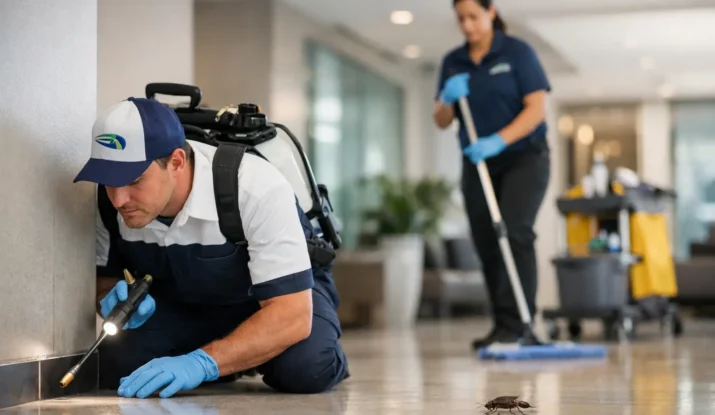
A single pest sighting can create a much larger facility problem. In a restaurant, it can affect health inspections and guest confidence. In an office, school, warehouse, or healthcare setting, it can lead to complaints, contamination concerns, damaged materials, and disruptions for staff. Effective pest management is not simply a response after pests appear. It is a coordinated prevention program that connects sanitation, building maintenance, waste handling, monitoring, and prompt corrective action.
For commercial properties, the goal is straightforward: reduce the food, water, shelter, and access points that allow pests to establish themselves. A dependable program also gives facility managers clear documentation, consistent service, and a responsible partner when conditions change.
Why Pest Management Is a Facility Priority
Pests are drawn to the same conditions that make a facility difficult to manage: overflowing trash, food residue, standing water, cluttered storage areas, floor drains, gaps around doors, and inconsistent cleaning. Even a well-run property can be vulnerable when one of these conditions is overlooked.
The cost of waiting can extend beyond treatment. Rodents may damage wiring, insulation, packaging, and stored inventory. Flies can multiply quickly around drains, waste areas, and organic residue. Cockroaches and ants can spread through wall voids, break rooms, kitchens, and receiving areas before employees see obvious activity. For customer-facing businesses, the reputational impact of a visible pest can be immediate.
A proactive program protects more than appearance. It supports healthier working conditions, helps maintain sanitation standards, protects stored products and building assets, and reduces the chance that a minor issue becomes an urgent operational disruption.
Pest Management Starts With Prevention
Treatment has a role, but prevention is the foundation of long-term control. The most effective commercial plans use an integrated approach: identify the pest and source, correct the conditions attracting it, monitor results, and use targeted treatment only where needed.
Cleaning teams are often an essential part of that process because they see the facility at close range. Consistent removal of food debris, proper restroom cleaning, floor care, drain attention, and waste-area service all reduce conditions pests depend on. A color-coded cleaning system and assigned tools for separate areas can also help prevent cross-contamination in sensitive environments.
Facility maintenance matters just as much. A door sweep that no longer seals, an unprotected loading dock, a leaking pipe below a sink, or a crack around utility lines can create a direct route indoors. Pest activity is rarely caused by one issue alone. It is usually the result of several small gaps in cleaning, storage, waste handling, and building upkeep.
The Conditions to Check First
Facility managers should regularly review four areas: food, moisture, entry points, and harborage. Food includes crumbs in break rooms, open ingredients, vending spills, and waste that remains indoors too long. Moisture can come from plumbing leaks, condensation, floor drains, mop areas, or poorly maintained exterior drainage.
Entry points include gaps around doors, damaged screens, openings around pipes, and dock doors left open during deliveries. Harborage refers to protected places where pests can hide, such as cluttered storage rooms, cardboard buildup, unsealed wall penetrations, neglected utility closets, and debris near the exterior of the building.
The right priorities depend on the property. A restaurant may need frequent attention to grease areas, drains, and food storage. A warehouse may be more concerned with dock doors, pallets, perimeter vegetation, and incoming shipments. Medical and educational facilities often require especially careful coordination to protect occupied spaces and maintain documented sanitation practices.
What a Commercial Pest Control Program Should Include
A commercial service plan should be built around the building’s actual risks, not a generic visit schedule. Facilities with food preparation, heavy deliveries, shared tenant areas, or high public traffic may need more frequent monitoring than a low-traffic office.
A well-managed program typically includes these four elements:
- Inspection and identification: Regular inspections establish what pest is present, where activity is occurring, and what conditions may be contributing to it.
- Monitoring and documentation: Devices, service records, trend notes, and clear findings help management see whether activity is increasing, decreasing, or moving to a new area.
- Targeted treatment: Treatment should address the specific pest and location while following applicable safety procedures for the facility type.
- Corrective recommendations: Service should identify practical next steps, such as improving waste practices, repairing exclusion gaps, cleaning a drain, or reorganizing stored materials.
Documentation is particularly valuable for restaurants, healthcare facilities, schools, property managers, and industrial operations. When an inspector, tenant, or internal leadership team asks what has been done, a detailed service record provides a clear answer. It also makes recurring problems easier to diagnose instead of treating the same symptom month after month.
Sanitation and Waste Control Make the Difference
Pest control cannot compensate for inconsistent cleaning or overflowing waste. If food residue and moisture remain available, pests can return after treatment. This is why a coordinated facility-services approach is often more efficient than treating pest issues as a separate problem.
Break rooms, cafeterias, employee lockers, trash rooms, loading areas, restrooms, and floor drains deserve routine attention. Trash should be removed on a schedule that fits the volume of the facility, and exterior dumpsters should be kept closed and positioned away from doors when possible. Recycling and cardboard should not accumulate longer than necessary, especially in receiving and storage areas.
Restroom and consumable management also matter. Reliable supplies of soap, paper products, liners, gloves, and cleaning materials make it easier for employees and cleaning teams to maintain standards every day. When essential supplies run out, shortcuts happen, and sanitation conditions can decline quickly.
For facilities that need janitorial service, specialty cleaning, waste removal, supply replenishment, and pest control, working with one accountable provider can simplify follow-up. Instead of sending concerns between multiple vendors, a facility manager has a clearer path from inspection finding to cleaning correction, maintenance coordination, and verification.
Respond Quickly When You See Signs of Activity
Early warning signs deserve attention, even when there has not been a confirmed sighting. Droppings, gnaw marks, damaged packaging, unusual odors, grease marks along walls, insects near drains, or employee reports should be documented and reported promptly. Delays allow pests to reproduce, spread, or establish new nesting areas.
Employees should know who to notify and what details to provide. The location, time of day, pest description, and any nearby conditions such as a leak or open food container can help a service professional investigate efficiently. Staff should not move traps, apply unapproved chemicals, or disturb evidence before the area is assessed, particularly in food, healthcare, or occupied environments.
A fast response does not always mean the most aggressive treatment. It means identifying the source quickly, taking appropriate action, and correcting the condition that made the area attractive in the first place. That distinction helps protect people, property, and daily operations.
Choosing the Right Pest Management Partner
Commercial facilities need more than an occasional service call. Look for a provider that understands your building type, communicates findings clearly, works around operational hours, and provides practical recommendations rather than vague assurances. Service should be responsive when activity is reported and consistent enough to reveal patterns before they become major problems.
Ask how the provider documents inspections, how recommendations are communicated, and how pest service coordinates with cleaning and sanitation procedures. Also confirm that teams are properly trained and that the program can be adjusted for your facility’s occupancy, regulations, and risk level.
For Chicago-area facilities, seasonal changes add another consideration. Rodent pressure can increase when temperatures drop, while flies and other insects may become more active during warmer months. A plan that includes exterior monitoring, door and dock inspections, sanitation support, and scheduled interior service is better prepared for those shifts.
ABF Facility Services helps commercial clients bring cleaning, sanitation, waste support, consumable supply, and pest-control needs into a more manageable facility plan. The objective is not simply to react to a sighting. It is to maintain a clean, well-supplied environment where pests have fewer reasons and fewer opportunities to enter.
A clean facility sends a visible message to employees, tenants, customers, and visitors. Keep that message consistent by treating pest prevention as part of everyday facility care, not an issue to address only after it becomes impossible to ignore.