
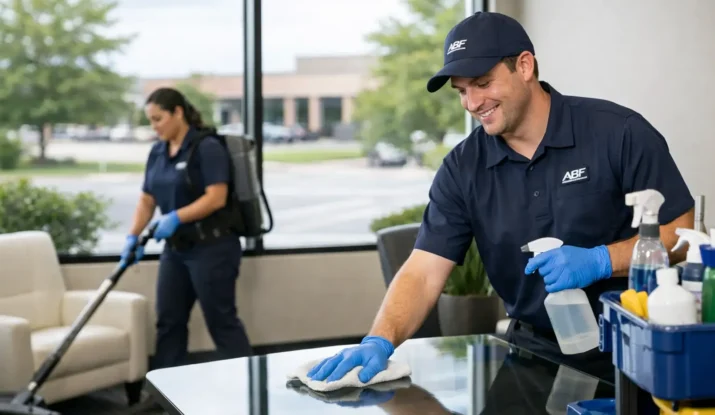
A spotless lobby at 8:00 a.m. means little if the restrooms run out of soap by noon, trash builds up behind the building, or a slick entry floor creates a safety concern after a wet Chicago-area morning. Commercial cleaning in south suburbs is not simply about making a building look presentable. It is about keeping daily operations moving, protecting the people in the facility, and giving employees, tenants, patients, students, and customers confidence in the space.
For facility managers and business owners, the right cleaning plan should remove recurring problems rather than create another vendor to chase. That means dependable crews, clear scopes of work, responsive communication, and a practical approach to supplies, specialty cleaning, and maintenance needs.
What Commercial Cleaning in South Suburbs Should Cover
A commercial property has different needs depending on who uses it, when it is occupied, and what happens there every day. An office may need evening janitorial service and regular carpet care. A restaurant may need grease-area attention, restroom supplies, linen support, and pressure washing. A warehouse may need dust control, floor maintenance, and trash removal that can keep pace with active operations.
The most effective service plans start with a walkthrough, not a generic checklist. Cleaning frequency, traffic patterns, floor types, restroom use, security requirements, and operating hours all affect the right scope. A medical office or school, for example, may require more frequent touchpoint disinfection than a low-traffic professional suite. Conversely, a large industrial facility may benefit more from scheduled machine floor cleaning and targeted high-dust work than from a standard office-cleaning routine.
A well-managed program typically combines recurring janitorial work with services such as hard-floor care, carpet cleaning, sanitization, pressure washing, pest control, and junk or waste removal. Bringing these needs together through one accountable provider can reduce scheduling conflicts and eliminate the common problem of several vendors each assuming someone else will handle an issue.
Cleanliness Is an Operational Standard
Visible cleanliness affects more than first impressions. It influences whether tenants renew, whether customers feel comfortable staying longer, and whether employees view their workplace as cared for. Less visible details matter just as much: dust in vents and corners, residue on restroom fixtures, neglected floor finish, or depleted paper products can quickly lead to complaints and unnecessary work for on-site staff.
There is also a safety and asset-protection component. Proper floor care can extend the life of vinyl, tile, concrete, and carpet while helping reduce slip hazards. Consistent restroom cleaning and replenishment support a healthier environment and make it easier to meet daily sanitation expectations. In industrial settings, removing debris and managing dust supports safer walkways and more organized work areas.
The goal is not to overclean every square foot with the same intensity. The goal is to use the right process where it has the greatest impact. High-touch entrances, restrooms, break rooms, elevators, reception areas, and shared equipment deserve frequent attention. Lower-traffic areas may be serviced on a different schedule. That distinction helps control costs without allowing standards to slip.
Why Consistency Matters More Than Occasional Deep Cleaning
A one-time deep clean can reset a neglected facility, but it cannot replace a reliable recurring program. Floors still receive daily wear. Restrooms still need attention. Waste still accumulates. When cleaning crews vary from visit to visit or service is completed without quality checks, small misses become noticeable problems.
Consistency comes from documented expectations, trained teams, and regular accountability. Uniformed, insured professionals who understand the facility’s priorities can work more efficiently and identify concerns before they become complaints. A color-coded cleaning system, microfiber tools, high-filtration vacuums, and appropriate chemicals also help prevent cross-contamination and improve the quality of routine work.
For facilities that prioritize environmentally responsible practices, product selection matters. Sustainable options, including Green Seal-certified products where appropriate, can support cleaning goals without introducing unnecessarily harsh chemicals into occupied spaces. The best choice depends on the facility, its occupants, and the cleaning task at hand. Disinfection requirements, food-service standards, and industrial soils may call for specific products or methods.
Common Problems a Better Cleaning Plan Can Solve
Many commercial cleaning relationships fail for predictable reasons. The scope is vague, communication is slow, supply replenishment is treated as an afterthought, or specialty work is left until conditions become severe. A stronger plan addresses these issues before they disrupt the business.
Restroom inventory is a clear example. A clean restroom is still a poor experience when soap dispensers are empty or paper products are unavailable. Recurring consumable management for toiletries, gloves, floor mats, reusable towels and mops, and other janitorial products gives facility teams fewer details to monitor. It also creates a more consistent experience for everyone using the building.
Floor maintenance is another frequently overlooked area. Daily mopping alone will not preserve a hard floor that needs periodic scrubbing, burnishing, stripping, or refinishing. Likewise, carpet can hold dirt, allergens, and stains long before it appears visibly soiled. Scheduled professional care protects these surfaces and can delay expensive replacement.
Exterior conditions deserve attention as well. Salt, mud, litter, and weather-related debris can affect curb appeal and track indoors. Pressure washing, entryway cleaning, and timely removal of junk or accumulated waste help maintain a professional property from the parking area to the front desk.
Choosing a Provider for South Suburban Facilities
When comparing commercial cleaning providers, look beyond a low monthly quote. The lowest price can become costly if service is inconsistent, crews are not properly trained, or basic requests require repeated follow-up. A clear proposal should explain what is cleaned, how often it is cleaned, which supplies are included, and how special requests are handled.
Ask how the provider staffs accounts and manages absences. Ask whether team members are trained for the facility type, whether they are insured, and how OSHA compliance is maintained. For a school, health care setting, restaurant, retail store, or industrial site, experience with the work environment matters because the risks and priorities are different.
It is also useful to ask about inspections and communication. A responsive provider should give facility contacts a practical way to report an issue, adjust service when occupancy changes, and schedule project work without disrupting business hours. The relationship works best when both sides can identify priorities early, whether that is a tenant move-in, a customer event, a spill response, or a seasonal floor-care project.
A Single Provider Can Simplify Facility Management
Managing cleaning, consumables, pest service, mats, linens, and occasional removal work through separate vendors can consume more administrative time than most teams expect. Each invoice, delivery schedule, service request, and complaint becomes another item to coordinate.
ABF Facility Services uses a One Provider, One Solution approach to help commercial properties consolidate these responsibilities. For a facility manager, that can mean one service partner for recurring janitorial work, specialty cleaning, supply replenishment, and related facility needs. The benefit is not just convenience. It is clearer accountability when a restroom, entryway, floor, or supply room needs attention.
This model is especially useful for organizations with multiple service needs across locations in communities such as Orland Park, Tinley Park, Homewood, Matteson, and Chicago Heights. Still, consolidation is not automatically the right answer for every organization. A property with highly specialized requirements may need to retain certain existing relationships. The key is determining where one coordinated provider can improve response time, visibility, and service consistency.
Build a Plan That Reflects Your Facility
The right commercial cleaning plan should be flexible enough to change with the building. A seasonal increase in foot traffic, a tenant turnover, a renovation project, or a new sanitation expectation can all require adjustments. A provider that listens, documents the change, and follows through is more valuable than one that offers a fixed package with little room for real-world needs.
Start with the areas that create the greatest operational risk or the most frequent complaints. Set cleaning frequencies based on actual use, establish standards for restrooms and common areas, and make sure supplies are replenished before they become an emergency. From there, schedule preventive floor and carpet care instead of waiting for surfaces to look worn.
A clean facility should feel dependable to the people who use it every day. When service is tailored, accountable, and supported by trained professionals, cleanliness becomes one less operational concern competing for your attention.