
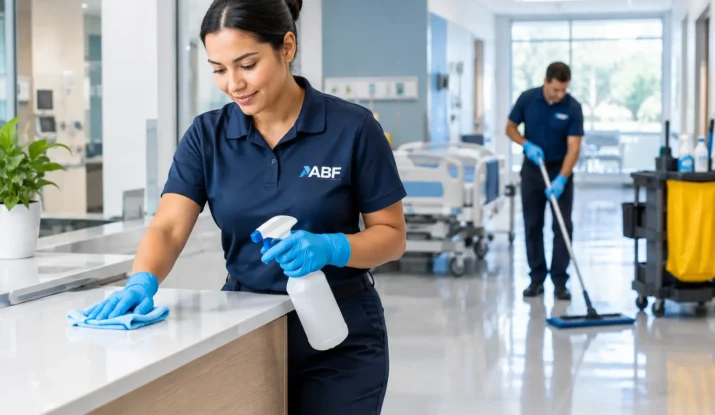
A missed high-touch surface, an unlabeled secondary spray bottle, or a cleaning log completed from memory can create more than an appearance problem in a healthcare setting. It can expose patients, staff, and visitors to avoidable risk while leaving the facility unprepared for an inspection or incident review. This healthcare cleaning compliance guide helps facility leaders turn daily cleaning into a documented, repeatable system that supports safety and accountability.
Compliance Starts With the Right Scope
Healthcare cleaning compliance is not one universal checklist. Requirements depend on the type of facility, the services provided, the populations served, and the areas being cleaned. A medical office, dental practice, outpatient surgery center, long-term care community, and hospital may all have different operational expectations.
The practical goal is consistent: clean and disinfect the environment in a way that reduces the risk of transmission, protects workers, and provides clear evidence that work was completed correctly. That means a facility should align its program with applicable federal, state, and local requirements, along with the guidance, licensing standards, accreditation expectations, and infection-prevention policies that apply to its operation.
Facility managers should avoid treating compliance as a once-a-year inspection project. The strongest programs make standards visible in daily routines, from how carts are stocked to how a spill is reported and how a restroom supply shortage is resolved.
Build Cleaning Zones Around Risk
Not every room needs the same cleaning frequency, product, or process. A useful compliance program separates the building into zones based on patient contact, traffic, contamination risk, and the type of care delivered.
Public entrances, waiting rooms, reception counters, elevators, and public restrooms need reliable attention because they receive frequent use. Clinical areas require closer coordination with clinical leadership because cleaning practices must protect both the environment and care activities. Exam rooms, treatment spaces, isolation areas, and restrooms may need cleaning between patients, after specific procedures, or on a schedule defined by facility policy.
High-touch points deserve special attention. These commonly include door handles, light switches, check-in counters, chair arms, grab bars, faucet handles, toilet flush handles, touch screens, elevator buttons, and shared equipment. A surface can look clean while still being missed in the disinfection process.
Define Who Owns Each Task
Ambiguity creates gaps. Your written scope should identify which team cleans public areas, who handles clinical-room turnover, who removes regulated waste, and who responds to spills. It should also explain when environmental services personnel must notify a supervisor or clinical staff instead of proceeding on their own.
For example, a cleaner may be responsible for routine floor care in an exam room, while clinical staff may retain responsibility for certain medical equipment. The division of work varies by facility, but it must be clear, trained, and documented.
Use Products the Right Way
A disinfectant only works as intended when it is appropriate for the surface and used according to its label. In healthcare environments, facilities commonly rely on EPA-registered disinfectants for the claims and organisms relevant to their setting. Product selection should also account for surface compatibility, fragrance sensitivity, ventilation, and whether the product is approved under the facility’s infection-prevention policies.
The most commonly missed instruction is contact time. If a product label requires a surface to remain visibly wet for a stated period, wiping it dry immediately may prevent the disinfectant from achieving its intended result. Teams need practical training on how much product to apply, when to pre-clean soil, and how long a surface must remain wet.
Chemical safety matters just as much. Secondary containers should be properly labeled, Safety Data Sheets should be accessible, and employees must never mix products unless the manufacturer specifically instructs them to do so. Storage areas should be secure, organized, and separated from food, linens, and patient-care supplies.
Prevent Cross-Contamination During Routine Work
A color-coded cleaning system gives staff a simple visual method for keeping tools assigned to the right areas. For example, separate microfiber cloths and mop heads can be designated for restrooms, general areas, and higher-risk clinical spaces. The colors matter less than consistent training and enforcement.
Microfiber tools can improve soil removal and reduce waste when laundered and managed correctly. Reusable mops and towels should have a defined collection, laundering, storage, and replacement process. Dirty tools should never travel back onto a clean cart or be used in another room without the required change-out.
Cleaning order also matters. Teams generally work from cleaner areas toward dirtier areas and from high surfaces to low surfaces. This approach helps reduce the chance that debris or contamination is transferred onto surfaces that were already addressed. A well-organized cart with clean supplies separated from used materials makes the right process easier to follow during a busy shift.
Train for Real Conditions, Not Just Orientation
Annual training alone is rarely enough. New employees need onboarding, but experienced staff also need refresher training when products change, processes are updated, audits reveal missed steps, or infection-control concerns arise.
Training should cover personal protective equipment, hand hygiene, chemical handling, bloodborne pathogen precautions, spill response, sharps awareness, waste handling, and the proper use of equipment. OSHA requirements apply to employee safety, including hazards associated with blood and other potentially infectious materials. Workers should know when they are authorized to clean an area and when they must stop, secure the area, and call a trained supervisor or designated response team.
Hands-on observation is more valuable than a sign-in sheet alone. Supervisors should watch how employees apply disinfectant, change gloves, handle used microfiber, operate vacuums, and clean difficult touch points. If a process is too complicated to perform correctly during a normal shift, it needs to be simplified or supported with better equipment and staffing.
Documentation Makes Compliance Defensible
If a facility cannot show what was cleaned, when it was cleaned, and who verified it, it may struggle to demonstrate consistency. Documentation does not need to become burdensome paperwork, but it should provide a reliable record of routine work and corrective action.
A practical system typically includes:
- Daily and shift-based cleaning checklists for assigned areas
- Restroom and high-touch-point inspection records
- Product inventories, Safety Data Sheets, and dilution or dispensing records
- Employee training and competency documentation
- Incident reports for spills, exposure concerns, complaints, and service recovery
- Supervisor quality inspections and follow-up notes
Paper logs can work in a smaller practice, while larger facilities may prefer digital tracking. The best option is the one supervisors actually review. A completed checklist should trigger action when a supply is missing, a room cannot be accessed, a surface is damaged, or a recurring issue requires maintenance support.
Measure What People Can See and What They Cannot
Visual inspections remain essential. Floors should be free of debris, restrooms should be stocked, waste should be removed, and public-facing spaces should look orderly. But visual appearance alone does not confirm that high-touch surfaces were disinfected correctly.
Use recurring supervisory inspections to check process details: proper tools on carts, correct product labels, contact-time practices, clean microfiber inventory, and consistent completion of logs. Trends matter more than a single score. Repeated complaints about a restroom, a supply closet, or a waiting area may point to an unrealistic schedule, insufficient materials, poor handoff communication, or a training gap.
Coordinate Cleaning With the Whole Facility
Healthcare compliance is easier when cleaning, maintenance, supply replenishment, and waste removal are coordinated rather than managed as isolated tasks. A leaking dispenser, damaged floor finish, overflowing receptacle, pest issue, or depleted glove supply can quickly affect sanitation and staff confidence.
This is where a single accountable facility-services partner can reduce administrative strain. ABF Facility Services supports Chicagoland healthcare facilities with trained, uniformed, insured teams, tailored cleaning schedules, consumable replenishment, specialty floor care, sanitation support, and responsive service. The objective is not simply to make a space look presentable. It is to help facility leaders maintain dependable conditions without juggling multiple vendors.
Review the Program Before a Problem Forces the Issue
Set aside time to review your cleaning program with operations, clinical leadership, and frontline staff. Ask where tasks are routinely delayed, which rooms are difficult to service, what supplies run short, and whether written procedures match what happens on the floor. The answers often reveal small corrections that prevent larger compliance concerns.
A healthcare facility earns trust through details that patients may never consciously notice: a clean chair arm, a stocked restroom, a properly managed spill, and a team that knows exactly what to do next. When cleaning is planned, trained, verified, and documented, it becomes a reliable part of patient safety rather than a last-minute response.