
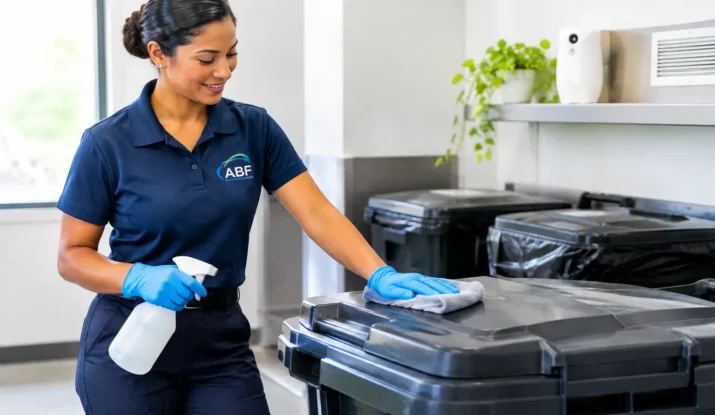
A trash room can look acceptable at first glance and still create a building-wide problem. Odor moves through corridors, loading areas, elevator lobbies, and nearby tenant spaces quickly. The best trash room odor solutions address the material causing the smell, the surfaces holding it, and the conditions allowing it to return – not just the air people notice.
For facility managers, property managers, restaurant operators, and industrial-site leaders, this is more than a housekeeping issue. Persistent waste odors can trigger tenant complaints, affect customer impressions, attract pests, and make otherwise clean properties feel poorly managed. A consistent, documented cleaning program is the difference between occasional relief and reliable odor control.
Why Trash Room Odors Keep Returning
Most lingering odors begin when organic residue is allowed to build up. Leaking bags, food waste, beverage spills, grease, cardboard saturated with moisture, and liquids collected beneath dumpsters all leave behind odor-producing bacteria. A deodorizer may mask the immediate smell, but it cannot remove the residue feeding it.
Drains are another frequent source. Floor drains can hold decaying debris or develop dry traps that allow sewer gases to enter the room. Poor airflow compounds the issue, particularly in enclosed trash rooms, basement areas, and loading docks. In some cases, an odor problem is also an early sign of pest activity, damaged waste containers, or a pickup schedule that no longer matches the property’s waste volume.
The right response depends on the source. A hospital, school, restaurant, apartment building, office tower, or warehouse may all need different cleaning frequencies, waste handling procedures, and sanitation products.
7 Best Trash Room Odor Solutions for Commercial Properties
1. Remove Waste Before It Becomes a Cleaning Problem
The most effective odor control starts with collection schedules. Overflowing bins and compactors hold waste longer, create more leaks, and make thorough cleaning difficult. Review how quickly the room fills on busy days, weekends, and after events. If pickup timing or container capacity does not match actual volume, no amount of fragrance will solve the underlying problem.
Inside the property, staff should move waste out of occupied areas promptly and use durable, properly sized bags. Double-bagging wet or food-heavy waste can be appropriate, but it should not become a substitute for reliable removal. Bags should be sealed before they enter the trash room, and damaged containers should be replaced quickly.
2. Clean Floors, Walls, and Containers at the Source
Trash rooms need more than sweeping and a quick mop. Waste residue often collects along baseboards, behind dumpsters, around compactor doors, beneath carts, and on wall surfaces where bags rub during transport. These areas require detail cleaning with products designed to break down soil before disinfecting or deodorizing.
A practical sequence is to remove loose debris, apply the appropriate cleaner or degreaser, allow sufficient dwell time, agitate heavy buildup, rinse or extract residue, and dry the area. Cleaning crews should use dedicated, color-coded tools for waste areas so contaminants are not transferred to restrooms, break rooms, or public spaces.
Dumpster and bin exteriors matter as much as floors. If the container itself is coated with residue, the odor will return shortly after the room is cleaned. Scheduled container washing is especially valuable for restaurants, multifamily buildings, health care properties, and locations that handle large amounts of food waste.
3. Treat Floor Drains as Part of the Odor-Control Plan
A drain that looks clear can still be the source of a strong odor. Food particles, grease, sludge, and cleaning runoff settle below the grate, while dry P-traps can release sewer gases into the room. Regular drain maintenance should include removing visible debris, cleaning the drain cover and surrounding floor, and treating the drain with a facility-approved biological or enzymatic product when appropriate.
Water should be added to infrequently used floor drains to maintain the trap seal. Properties with recurring drain odors may need a plumbing inspection, particularly if there are slow drains, backups, cracked piping, or repeated sewer-gas smells. Janitorial service can manage routine cleaning, but structural or plumbing failures require a different correction.
4. Improve Airflow Instead of Covering Up the Smell
Ventilation is one of the best trash room odor solutions because it reduces the concentration of odors before they travel through the building. Exhaust systems should draw air out of the trash room, not push odor into hallways or loading areas. Keep vents clear of dust, grease, cardboard, and stored supplies, and verify that fans operate during the hours waste is handled.
Air fresheners can improve the experience after cleaning, but they are a finishing step, not an odor-control strategy. Strong fragrances layered over garbage or drain odors often make complaints worse. If an enclosed room remains humid or stagnant after cleaning, involve HVAC or building maintenance personnel to assess airflow, fan performance, and pressure balance.
5. Control Moisture and Leaks Immediately
Moisture turns routine waste residue into a fast-moving odor issue. Inspect the room for leaking bags, spilled liquids, puddles under containers, condensation, and water entering around doors or drains. Even a small leak can keep bacteria active and attract flies.
Use closed-lid containers wherever possible and place absorbent materials or spill-control supplies where employees can respond quickly. For locations that generate wet waste, a more frequent floor-cleaning schedule may be necessary. This is particularly true during Chicago’s warmer months, when heat and humidity speed up odor development and pest activity.
6. Build Pest Prevention Into Daily Sanitation
Flies, cockroaches, rodents, and other pests are drawn to accessible food residue, standing water, and unsealed waste. A trash room that smells bad is often sending the same signal to pests. Cleaning, waste management, and pest control should work as one coordinated plan rather than separate tasks handled without communication.
Keep lids closed, remove cardboard clutter, seal gaps around pipes and doors, and avoid leaving loose bags on the floor. Staff should document signs such as droppings, gnaw marks, larvae, insect activity, or damaged bags. Early reporting allows corrective action before a small sanitation concern becomes a tenant-facing problem.
7. Use a Consistent Schedule With Clear Accountability
The best cleaning process fails when it is inconsistent. A trash room needs a written scope that identifies what is cleaned daily, weekly, and monthly, who completes the work, and how the result is verified. High-traffic properties may need daily floor and touchpoint cleaning, while detailed wall washing, drain treatment, and container cleaning can follow a scheduled rotation.
A quality-control inspection should check more than whether bags are gone. Look for residue behind containers, blocked drains, standing water, pest evidence, damaged lids, and odor levels at the doorway and adjacent hallway. These details reveal whether the room is truly sanitary or simply temporarily empty.
Choosing the Right Cleaning Frequency
There is no single schedule for every property. An office building with mostly dry waste may need light daily attention and a deeper weekly service. A restaurant, senior living community, school cafeteria, medical facility, or multifamily property may need daily sanitation, frequent waste removal, and recurring pressure washing or container cleaning.
The key is to match the program to waste type, volume, room layout, ventilation, and occupancy. A professional provider should evaluate the entire process: how waste reaches the room, where spills occur, whether supplies are available, how containers are maintained, and where odor escapes. This produces a practical plan instead of a generic cleaning checklist.
When Odor Signals a Bigger Facility Issue
If odors return within hours of thorough cleaning, do not assume the crew missed a spot. The cause may be a cracked drain line, failed floor coating, poor ventilation, a compactor leak, inadequate dumpster service, or hidden pest activity. Repeated complaints deserve a documented inspection and a coordinated response from cleaning, maintenance, waste, and pest-control teams.
ABF Facility Services helps Chicagoland properties manage recurring janitorial cleaning, trash and junk removal, sanitation, pest-control coordination, and the supplies that support daily waste handling. Trained, uniformed teams can tailor service around your property’s traffic, waste stream, operating hours, and sanitation requirements.
A clean-smelling trash room is rarely the result of a stronger fragrance. It comes from prompt waste removal, detailed sanitation, maintained drains, controlled moisture, and a service partner accountable for the details people notice first.