
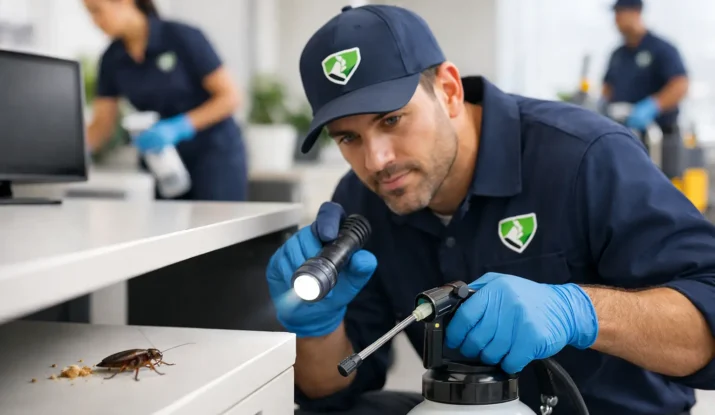
A single fruit fly near a breakroom sink or a mouse dropping behind a supply cabinet can become a much larger facility problem quickly. To prevent workplace pests, facility leaders need more than an occasional treatment. They need consistent sanitation, controlled food and waste practices, building maintenance, and a clear response process when warning signs appear.
Pests look for the same things employees do: food, water, warmth, and shelter. Commercial kitchens, offices, schools, health care facilities, warehouses, retail spaces, and multifamily common areas each create different opportunities. A practical prevention plan identifies those opportunities before pests can settle in, reproduce, and create complaints or compliance concerns.
Why Workplace Pest Prevention Starts With Daily Operations
Pest control is often viewed as a stand-alone service, but the conditions that attract pests are usually created through daily operations. Overflowing waste bins, food left in desks, damp floor drains, cluttered storage rooms, and gaps around utility lines can all turn a well-run property into an easy target.
The business impact goes beyond an unpleasant sighting. Pests can affect employee comfort, customer confidence, tenant satisfaction, food safety, inventory, and a facility’s professional appearance. In restaurants, health care settings, and schools, the stakes can be especially high because sanitation requirements and public expectations are less forgiving.
The most effective approach is integrated pest prevention. This means cleaning teams, maintenance staff, food-service personnel, tenants, and pest-control professionals share responsibility for removing attractants and documenting problems early. Treatments may still be needed, particularly after an active infestation, but they work better when the environment no longer supports recurring activity.
Clean the Places Pests Use Most
Pests do not need visibly dirty conditions to find what they need. A few crumbs under a vending machine, residue on a recycling bin, or moisture beneath a refrigerator can be enough. Cleaning should focus on the overlooked areas that collect food particles, grease, and water over time.
Breakrooms and kitchens deserve daily attention. Wipe counters, tables, appliance handles, and sink areas; clean spills promptly; and empty waste before it overflows. Floors should be swept and mopped with attention to edges, under equipment, and behind appliances. In food-service operations, degreasing schedules for floors, mats, drains, and hard-to-reach equipment areas are essential. Grease buildup is not only a cleaning issue. It can provide a food source and hiding place for pests.
Restrooms, janitor closets, and mechanical areas also require routine inspection. Leaking fixtures, standing water, wet mops, and damp cardboard create favorable conditions for cockroaches and other moisture-seeking pests. Use color-coded cleaning tools to reduce cross-contamination between restrooms, food areas, and general office spaces. Keep reusable mops and towels laundered, dried, and stored correctly rather than leaving them wet in a closet overnight.
Cleaning frequency should match the facility’s traffic and risk level. A lightly used professional office may need a different schedule than a busy clinic, school cafeteria, distribution center, or restaurant. The goal is not to over-clean every square foot. It is to consistently address the areas where food, moisture, waste, and traffic meet.
Pay Attention to Floors, Drains, and Equipment Edges
Floor care is a pest-prevention detail that is easy to underestimate. Cracked grout, damaged baseboards, worn floor transitions, and debris along wall edges create protected pathways and hiding places. Regular vacuuming with high-filtration equipment removes crumbs and fine debris from carpeted offices, while scheduled hard-floor cleaning keeps residue from building up in kitchens, corridors, and receiving areas.
Drains need special attention in locations with food preparation, frequent wet cleaning, or floor drains. Organic buildup inside and around drains can attract small flies. Cleaning the surrounding floor is helpful, but it may not remove the material inside the drain where larvae develop. A facility-specific drain maintenance plan is often the right answer.
Control Food, Waste, and Deliveries
Waste management is one of the clearest ways to prevent workplace pests. Indoor trash receptacles should have liners, be emptied on a reliable schedule, and be cleaned when residue accumulates. Food waste should not remain in desks, locker areas, or breakroom bins overnight, especially before weekends and holidays.
Outside waste areas matter just as much. Dumpster lids should stay closed, enclosures should be kept free of loose debris, and spills should be addressed rather than allowed to accumulate. If a dumpster is consistently overfilled, the solution may be more frequent pickup, a larger container, or a review of how waste is being separated. Recycling containers can also attract pests when bottles and cans contain food or beverage residue.
Storage practices deserve the same discipline. Keep dry goods and employee snacks in sealed containers, not open bags or thin cardboard. In warehouses and stockrooms, store materials on shelving or pallets with enough clearance to inspect beneath and behind them. Avoid allowing cardboard, unused furniture, or obsolete supplies to collect in back rooms. Clutter provides shelter, restricts cleaning access, and makes an early pest issue harder to spot.
Deliveries are another common entry point. Inspect incoming boxes, pallets, and plant materials for signs of insects or rodent activity before moving them deeper into the building. This is particularly relevant for receiving areas, food operations, retail stockrooms, and industrial facilities with frequent shipments.
Close the Gaps That Let Pests In
Even an exceptionally clean facility can have pest activity if the building envelope has open access points. Rodents can enter through surprisingly small gaps, while insects may come through torn screens, unsealed utility penetrations, poorly fitted doors, and damaged weather stripping.
Routine exterior inspections should include loading docks, service doors, roofline openings, vents, windows, and areas where pipes or cables enter the building. Door sweeps should make proper contact with the threshold. Screens should be intact. Gaps around plumbing and electrical penetrations should be sealed with materials appropriate for the building and the pest concern.
Water management is equally important. Repair plumbing leaks promptly, correct drainage issues near the foundation, and avoid standing water around exterior doors, dumpsters, or rooftop equipment. Landscaping should be maintained so shrubs and branches do not rest against the building. Dense vegetation and accumulated leaves can hold moisture and give pests a protected route toward the structure.
Some repairs require a property owner, maintenance contractor, or building engineer. That is why documentation matters. A cleaning or pest-control team can report a gap, leak, or damaged door sweep, but the preventive value is lost if the repair is not assigned and completed.
Build a Reporting Process Employees Will Use
Employees are often the first people to notice a problem, but they may not report it if they do not know whom to tell or assume a single sighting is insignificant. Give staff a simple process for reporting pest evidence, including the location, date, type of activity, and any contributing condition they observed.
Useful signs include droppings, gnaw marks, damaged packages, insect skins, nests, unusual odors, and repeated insect sightings near drains or windows. Encourage employees not to spray personal products or move contaminated material without direction. Uncoordinated responses can spread pests, interfere with monitoring, or create unnecessary chemical exposure.
A log helps facility managers identify patterns. If several reports come from the same breakroom, loading dock, or storage room, the issue is likely connected to a condition that needs correction. Fast reporting allows the facility to address the source before a minor incident becomes a service disruption.
Use Professional Pest Control as Part of the Plan
Professional pest control is most effective when it is scheduled, documented, and coordinated with cleaning and maintenance. A trained technician can identify pest species, locate likely entry points, use monitoring tools, and recommend targeted treatments rather than relying on a one-size-fits-all response.
The right service schedule depends on the property. A restaurant or health care facility may need frequent visits and detailed documentation, while a low-traffic office may need periodic inspections supported by strong sanitation practices. Facilities with active pest pressure, nearby construction, aging infrastructure, or shared walls may also require a more intensive program.
For Chicagoland facility managers, winter weather does not remove pest risk. It often pushes rodents and insects toward heated indoor spaces. Maintaining cleaning, waste, inspection, and exclusion practices year-round gives your property a better chance of staying ahead of seasonal activity.
ABF Facility Services can coordinate cleaning, sanitation, waste-related support, supply replenishment, and pest-control programs through one accountable facility-services relationship. That coordination helps reduce missed details between vendors and keeps corrective actions moving when a problem is identified.
A pest-free workplace is built through small, repeatable decisions: empty the bin, clean beneath the equipment, report the leak, seal the gap, and inspect the storage room before it becomes a hiding place. When those routines are consistently handled, employees and visitors notice what matters most – a clean, safe, well-managed facility.